
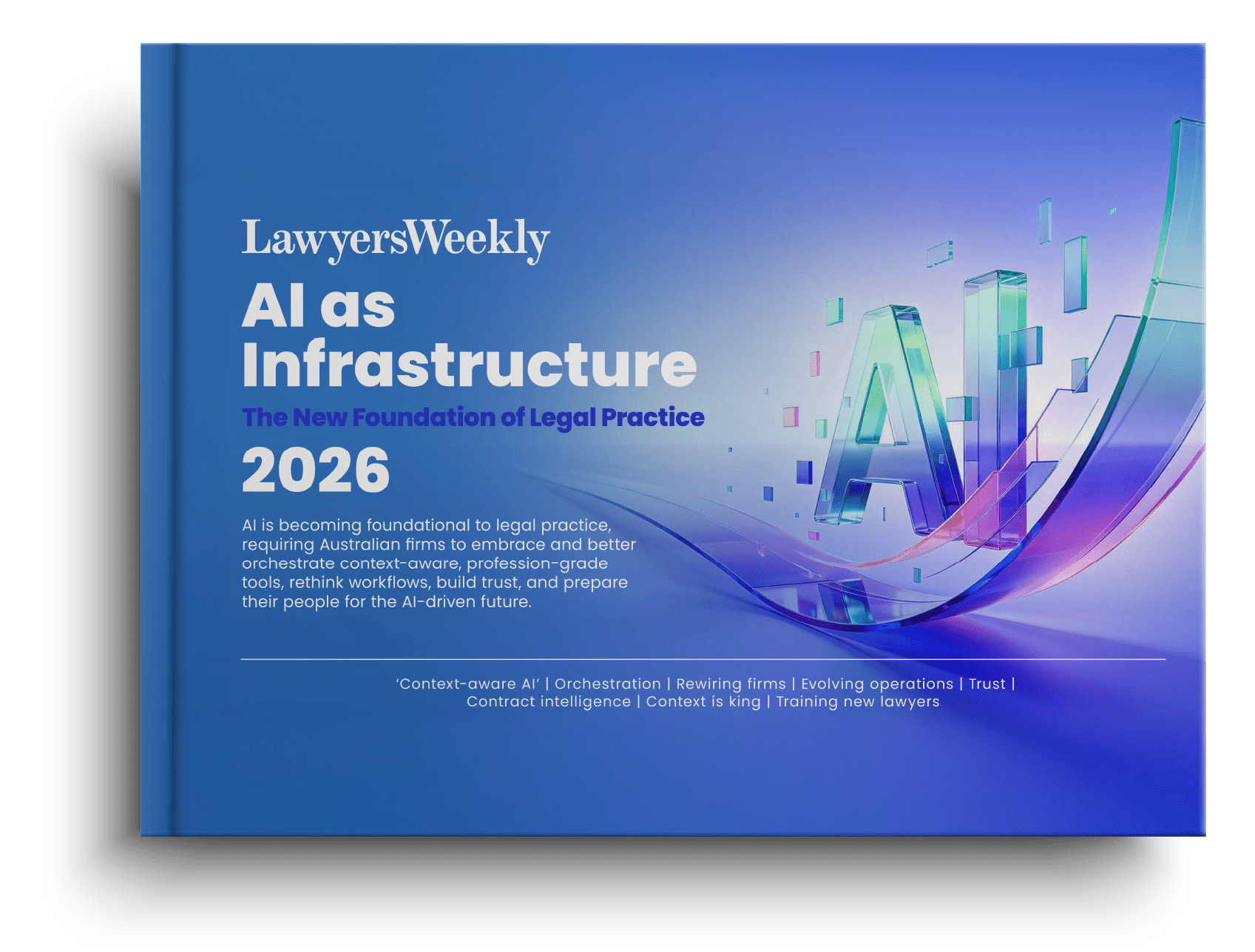
AI as Infrastructure: The New Foundation of Legal Practice 2026
Your firm has AI. The bigger question is what happens next.
AI is already part of legal practice. Lawyers are using it to research, draft, review documents, manage matters, and take work off their desks that once consumed hours.
Now firms face a different challenge: how do you build AI into the way legal work actually gets done without compromising the judgement, confidentiality, and accountability that clients expect?
Lawyers Weekly’s AI as Infrastructure: The New Foundation of Legal Practice 2026 brings together eight leading legal technology providers to examine what the next stage of AI adoption means for Australian legal professionals.
Download now
Step 1: Let's get your details.
In partnership with:








Why download this guide
Adding another AI tool is easy. Making AI genuinely useful across a legal practice is harder.
As adoption grows, firms are having to make decisions about how their technology connects, what information AI can access, which outputs lawyers can trust, how client data is protected, and where human judgement remains essential.
There is also a bigger question emerging: if AI takes on more of the work traditionally performed by junior lawyers, how will the next generation develop the judgement and experience the profession depends on?
This free Lawyers Weekly guide examines these issues and what firms should be thinking about as they prepare for 2027 and beyond. These questions are directly reflected throughout the guide, including its examination of junior development, governance, trust, and connected legal workflows.
Inside the guide
Eight leading legal technology providers explore the questions shaping the next phase of AI in legal practice:
- Clio – The need for ‘context-aware AI’: Why moving beyond fragmented AI tools and giving technology the right matter context could unlock more value for lawyers.
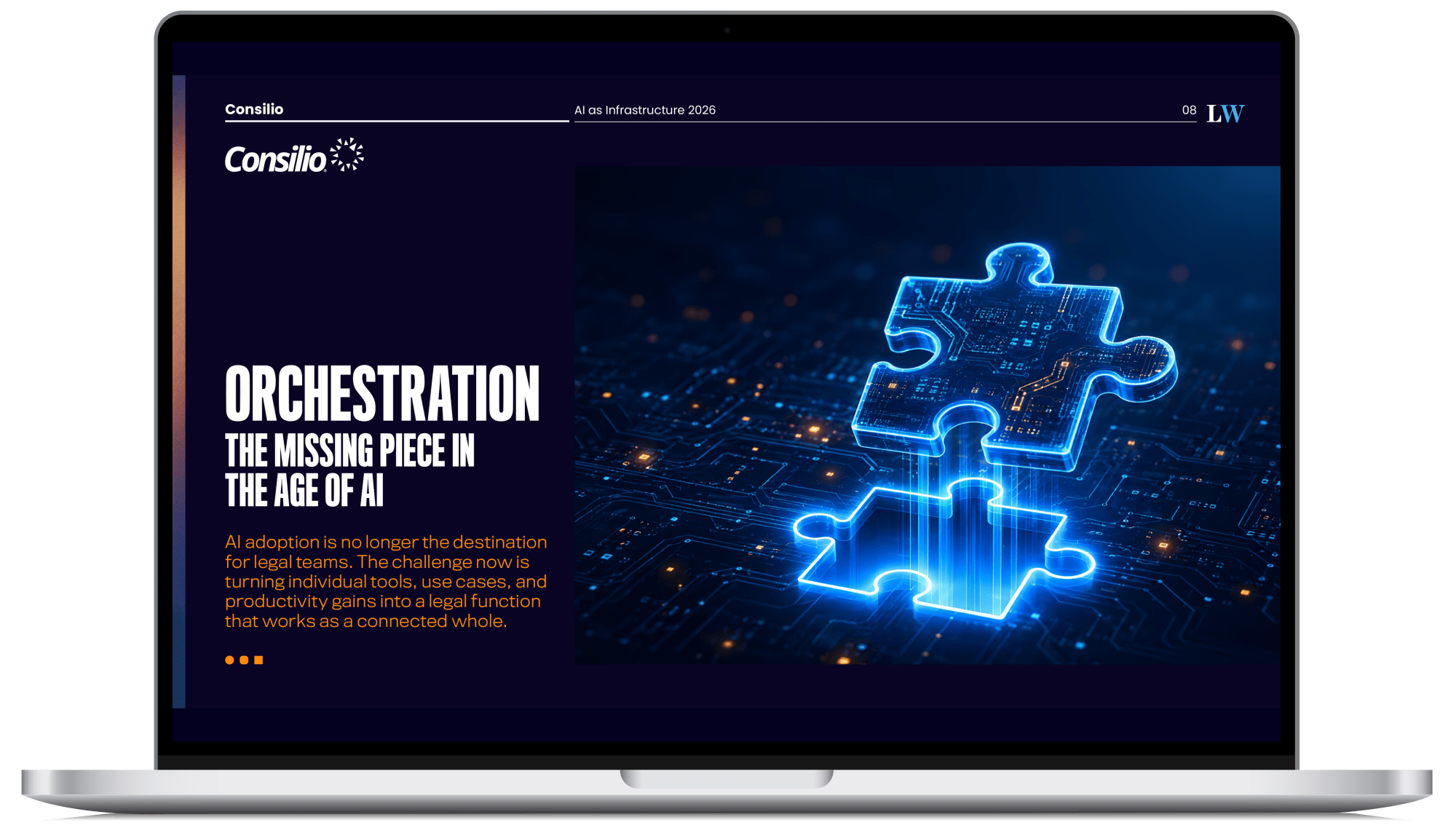
- Consilio – Orchestration: The missing piece in the age of AI: Why adopting AI is only the beginning, and how connecting technology, data, governance, processes, and people can turn individual tools into genuine legal transformation.
- JurisTechne – Rewiring the law firm: How verifiable AI could change the traditional division of legal work while keeping lawyers firmly responsible for judgement, strategy, and client advice.
- LEAP – How AI continues to change the day-to-day running of legal practices: Where AI is already removing administrative and repetitive work, changing the role of junior lawyers and becoming embedded in everyday legal workflows.
- LexisNexis – Trust is the new productivity: Why the real measure of legal AI isn’t simply how quickly it produces an answer, but whether lawyers can verify it and confidently stand behind it.
- Luminance – How contract automation is evolving into contract intelligence: How AI can take contracts beyond drafting and negotiation to uncover commercial insights, risks, and opportunities across the business.
- NetDocuments – Context is king: Why a firm’s matters, documents, precedents, and institutional knowledge could become one of its greatest advantages as legal AI develops.
- Thomson Reuters – Training a generation that skips the grind: What happens to the development of legal judgement when AI takes on the repetitive work through which generations of lawyers traditionally learnt their craft.
Get your copy
AI as Infrastructure: The New Foundation of Legal Practice 2026 is free to download from Lawyers Weekly.
Find out what the next stage of AI means for legal practice and the decisions firms need to start making now.

Download the ebook
Download the free guide