

Powered by
MOMENTUM
MEDIA

Legal gaps that may prevent law enforcement and security agencies from responding to terrorist attacks like the Bondi Beach massacre will be examined by the Royal Commission into Antisemitism and Social Cohesion, the commissioner said in opening.
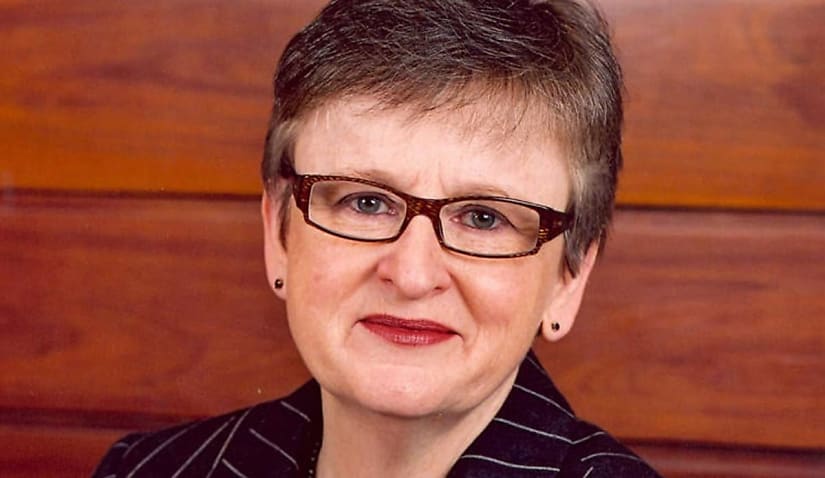

Former High Court justice and head of the Royal Commission into Antisemitism and Social Cohesion (RCASC), the Honourable Virginia Bell AC SC, committed to a 30 April deadline for an interim report into legal and regulatory gaps that may impact on prevention and responses to terrorist attacks, like that of the Bondi Beach massacre.
This will involve investigating the information-sharing between Commonwealth, state and territory agencies, as well as their communication with the organisers of the Hanukkah event.
“The commission is to investigate the security arrangements for that event, and to report on whether our intelligence and law enforcement agencies performed to maximum effectiveness,” Bell said.
“This assessment necessarily requires consideration of whether these agencies had appropriate powers and systems and whether existing legislative frameworks and protocols governing the release of information prevented … appropriate, preventative action.”
The commission was called on 9 January by the Governor-General, less than a month after 15 were killed at Bondi. Gunman Sajid Akram was shot dead, and his son, Naveed Akram, is facing 15 counts of murder, 40 counts of attempted murder, and a terrorism offence.
To ensure it does not risk prejudice to the criminal proceedings, Bell said the commission would not lead evidence of the attack, including by refraining from having eyewitnesses give evidence. Family members were invited to privately meet with Bell later this week.
Three weeks after the attack, and just prior to the inquiry being called on, former director-general of ASIO, Dennis Richardson SC, put various intelligence, national security and law enforcement agencies on notice of material that would need to be reviewed.
The absorption of Richardson’s work into the commission “has led to some delay”, Bell said, as has the need for the intelligence agencies to consider questions of public interest immunity, statutory non-disclosure divisions, and legal professional privilege.
“The delays in accessing material [have] made it unlikely that counsel assisting the commission will be in a position to adduce evidence concerning the adequacy of the security arrangements for the Hanukkah event, and aspects of the effectiveness of the work of intelligence and law enforcement agencies before the deadline for the production of the interim report,” Bell said.
“That evidence may end up being led after the interim report is delivered, and in that case will form part of the final report.”
Senior counsel assisting Richard Lancaster SC said dozens of notices to produce were issued to Commonwealth and state agencies, but that process “is not presently where we would like it to be”. There are further notices to produce that are also yet to be issued.
Bell said she was confident the interim report would still be able to identify any urgent need for legislative or administrative action.
The commission would also consider recommendations for agencies to tackle anti-Semitism, including by looking into the training officers receive on responding to the risk of, or actual, anti-Semitic conduct.
It will then investigate the key drivers of anti-Semitism.
Despite some controversies as to how it impacts political views, Bell said the commission would rely on a working but non-legally binding definition of anti-Semitism developed by the International Holocaust Remembrance Alliance (IHRA).
That is, “anti-Semitism is a certain perception of Jews, which may be expressed as hatred towards Jews. Rhetorical and physical manifestations of anti-Semitism are directed towards Jewish or non-Jewish individuals and/or their property, towards Jewish community institutions and religious facilities.”
As for the social cohesion aspect, Bell said she expects various forms of social cohesion outside of anti-Semitism would be raised with the commission, but clarified what the inquiry intended to do.
“Against the background of the massacre of innocent people who appear to have been targeted simply because they were Jewish, I trust everyone will appreciate why the focus of this commission will be on tackling anti-Semitism as a starting point in strengthening our bonds of social cohesion,” Bell said.
The inquiry has been adjourned to a date to be fixed.

