

Powered by
MOMENTUM
MEDIA

A Supreme Court judge emphatically rejected any suggestion that junior lawyers should shoulder the blame for the mistakes of their superiors.
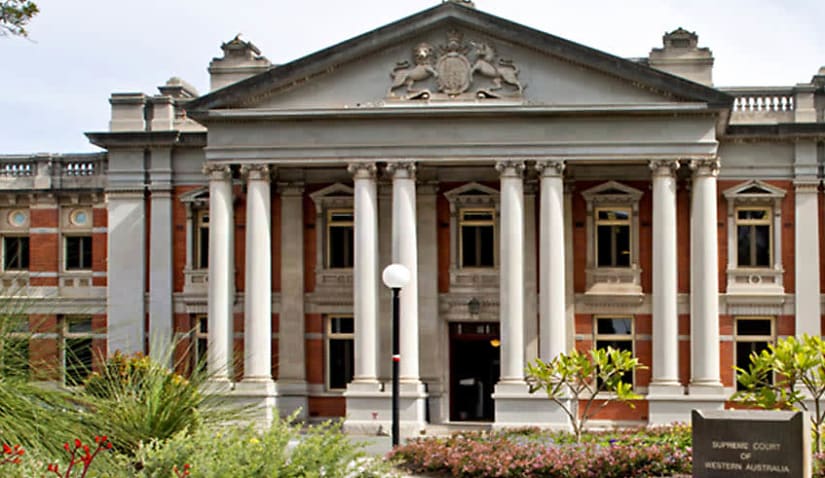

The Supreme Court of Western Australia was critical of Hale Legal’s principal for having a relatively new junior lawyer take responsibility for delay, non-compliance and an affidavit that offered little explanation.
Appearing before Justice Matthew Howard in Badat v BP Australia, the junior apologised to the court and explained the firm had “a limited number of solicitors available to assist me in the conduct of this matter”.
Justice Howard, who made plain he meant no criticism of the junior, said the resourcing of the plaintiff’s case was not the responsibility of an employed solicitor, but rather the principal of the firm.
Whatever difficulties the firm had in appropriately preparing for the trial were “not to be laid at the feet of [the junior]”, he clarified.
“Any idea that it is appropriate for a more junior practitioner to be taking responsibility on oath for the failings of a more senior practitioner is to be rejected outright,” Justice Howard said.
“Responsibility is not to be moved downwards.”
Applications made on behalf of the plaintiff in February 2026 were extremely late and “quite close” to the commencement of the trial.
Justice Howard said the court would ordinarily expect “full, cogent and compelling evidence” to support the lateness, but this was not the case.
The affidavit prepared by the junior “ignored the history of the matter”, did not provide an explanation of the plaintiff’s position leading up to a key statement, and there was no explanation for the raising of objections to jointly appointed experts whose reports were filed seven months prior.
“It is regrettable, to say the least, that on such an important application so close to trial, the senior practitioner who is a principal of the firm with the day-to-day conduct of the proceedings did not make an affidavit nor seek to explain adequately the plaintiff’s delays and non-compliance with the court’s orders,” Justice Howard said.
“It should not have been left to [the junior] to make such an affidavit.”
Justice Howard acknowledged it “may be considered harsh” to be critical of Hale Legal, given it only came on the record in June 2025 and was the sixth firm of solicitors to represent the plaintiff.
However, Justice Howard said it was assisted by counsel who was briefed in the matter long before them, and the firm was involved in the formulation of the agreed trial timetable and listing of the matter.
“It could not be said that Hale Legal were complete strangers to the plaintiff or these proceedings by June 2025,” Justice Howard said.
The case: Badat v BP Australia Pty Ltd [2026] WASC 48.

