

Powered by
MOMENTUM
MEDIA

While damning findings were made about Star’s most senior lawyer and her role in investigating a Chinese money laundering syndicate, a senior judge rejected a regulator’s claims that she should have also made certain recommendations to the CEO and board.
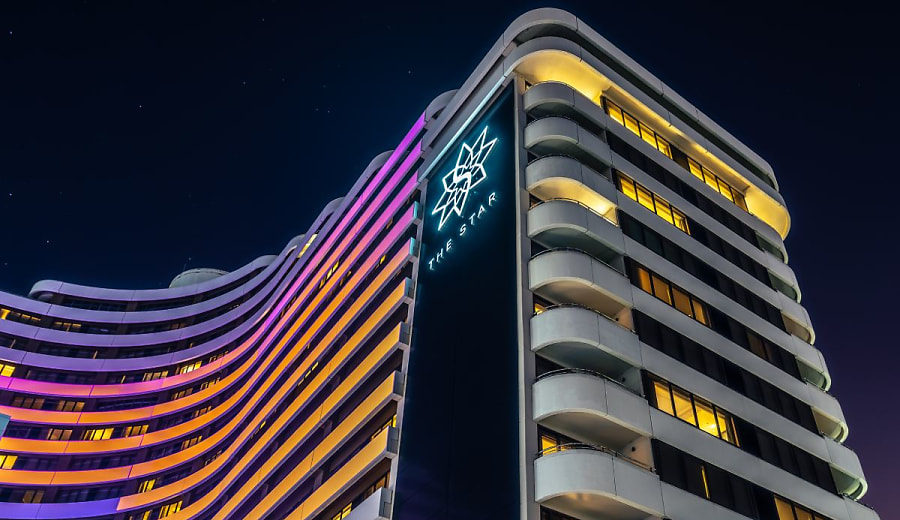

Star’s company secretary, group general counsel and group chief legal and risk officer (CLRO), Paula Maree Martin, was found to have failed to properly address money laundering risks from its then-largest gambling junket, Suncity, and its CEO, Alvin Chau.
The Federal Court also found Martin played a role in misleading Star’s bankers at National Australia Bank (NAB) as to the use of UnionPay cards, or CUP, which was prohibited for gambling.
Having failed to exercise her powers and discharge her duties as an officer with the degree of care and diligence required, Justice Michael Lee found Martin contravened the Corporations Act.
Justice Lee was “unpersuaded” by Martin’s affidavit evidence that maintaining Star’s business associations with Suncity and Chau involved “no more risk than dealing with other junkets”.
“Martin knew of a miscellany of alarming and concerning information pertaining to Chau and Suncity, which meant that maintaining associations with Chau and Suncity gave rise to the pleaded foreseeable risks of harm to Star,” Justice Lee said.
Star’s CEO and managing director, Matthias Michael Bekier, was also found to have failed to exercise his powers and duties to the requisite standard of care and diligence, and breached the Corporations Act.
Credibility and her role as legal practitioner
Justice Lee was highly critical of Martin’s credibility, having found her to be an “unimpressive witness” who reconstructed events to accommodate documentary evidence and invoked “uncertainty of memory” when reconstruction would not work.
Referring to her conduct relating to CUP and an email sent to NAB – detailed below – Justice Lee found inconsistencies in her written statement filed in an inquiry and her Federal Court affidavit.
While he noted he regretted coming to the conclusion, Justice Lee said Martin’s CUP behaviour supported ASIC’s submission that the inconsistencies in her evidence demonstrate she was a witness who was “willing to tell an untruth of an important matter if she perceived that doing so could assist her in maintaining her position”.
“I do not make this finding lightly.
“I recognise it is a serious conclusion to draw about a witness who is a solicitor, having a paramount duty to the court and the administration of justice, but I am amply persuaded it is the most rational way of explaining the inconsistencies in her evidence and her unsatisfactory demeanour,” Justice Lee said.
Martin attempted to draw a distinction between the separate duties and responsibilities she held in the capacity of company secretary, group general counsel and CLRO. She claimed not to have had a direct reporting line to the board in her role as company secretary.
Justice Lee said the suggestions she could operate “within discrete spheres of responsibility” was without substance.
“At the risk of stating the obvious, Martin was the most senior solicitor employed by Star and held a practising certificate, and those to whom she came in contact would have expected her to attend to the legal advisory work central to such a role,” Justice Lee said.
The Suncity 2018 allegations
In May 2018, Martin received an information note from Star investigator Andrew McGregor, entitled Operation Money Bags, which had the stated purpose of briefing the legal team “to assist them in the preparation of legal advice for the business in relation to legal and regulatory obligations arising from the investigation and prepare for any anticipated legal proceedings”.
McGregor recounted efforts to investigate a $45,000 cash transaction at Suncity’s Salon 95, which involved a non-junket participant who needed money for a “personal business matter”. The man was seen being handed the $45,000 in a plastic bag.
On three occasions, McGregor said Suncity staff were unwilling to answer questions or provide documentation about the transaction.
McGregor also identified several other suspicious cash transactions, including a number of instances where Suncity staff were handling substantial amounts of cash from various carriers.
Martin was found to be aware of an email from Star’s general counsel to Bekier, which indicated the transactions were of “grave concern” and exposed Star to an “unacceptable level of risk”.
On both the information note and email, Martin sought to downplay the significance. For example, she agreed it was “suspicious” but said there was a possibility the transactions were regular, or that they warranted investigation but were not necessarily suspicious.
In May 2018, KPMG provided two AML/CTF reports to Star, which had found junkets were generally considered to be “higher risk” and Star did not have in place any “formal risk assessments”.
KPMG said: “It also appeared that limited due diligence was conducted on junket operators and only a World-Check search was conducted on junket participants, in particular, with no information on source of funds and wealth.”
The court found Martin was aware of these reports.
Considering Martin’s evidence and her credibility, Justice Lee said her evidence was “incredible” and should not be accepted.
He also refused to accept Martin’s evidence that it was not part of her or her team’s responsibility to ensure compliance with AML/CTF, having found her key responsibilities included managing “a full legal and commercial advisory role … with all aspects of the law”.
The Suncity 2019 allegations
ASIC’s case was that Martin was aware the risks to Suncity in 2019, including media reporting about the Crown and information as to law enforcement’s interest in Salon 95.
The latter included a draft Operation Lunar note from McGregor, which detailed his attempts to investigate a $200,000 cash transaction and the suspicious activity of staff when questioned.
During cross-examination, Martin conceded she had “some concerns” when reading the draft version of the note and ultimately conceded in final submissions that she knew or ought to have reasonably known of the final, updated version.
Much like with Suncity 2018, Martin “unmeritoriously” attempted to downplay the significance of information about police excursions, going so far as to suggest they were “common”. During cross-examination, she was unable to recall any specific examples.
Notwithstanding the evidence, Martin did not accept she was required to provide the information to the board. She submitted her role did not encompass “responsibility to report to the board on matters of this kind” and contended Bekier was already aware.
These contentions were rejected.
The CUP warning and response letter
On 6 November 2019, the Star became aware CUP was considering issuing NAB a directive to cease provision of its acceptance at the Star, and that CUP could fine NAB and terminate its ability to accept CUP.
By midday the next day, Star responded that individuals were spending CUP funds on accommodation and entertainment only.
By at least this time, Justice Lee was satisfied Martin was “well aware” of the gambling prohibitions on CUP. She had also received two email chains relating to this correspondence.
Based on her awareness, her legal qualifications and her position as Star’s most senior solicitor, Justice Lee said Martin was aware this email contained inaccurate, incomplete and misleading representations, and that CUP and/or NAB would be misled.
In these circumstances, Justice Lee said a reasonable officer in Martin’s position would have instructed or advised Star to prepare a response that was accurate and completely described the CUP process, including how patrons were permitted to use the cards.
The officer should have also recognised that the representations were inaccurate, incomplete and misleading, and would have recognised that this would expose Star Sydney to the CUP suitability risk.
He also found an officer would not have approved the sending of the response and advised that an accurate response be sent instead.
“With her legal education, training and experience, she was well-equipped with the knowledge and skills to identify misleading representations, and to have been attentive to the legal and commercial risks to which Star would be exposed if it dealt falsely with one of the group’s key lenders,” Justice Lee said.
Justice Lee repeated his finding that he was unpersuaded by Martin’s “untenable” contention that she did not have a responsibility to inform he board of the matters concerning CUP.
Where ASIC’s case fails
On the first of ASIC’s three cases, it alleged a reasonable officer in Martin’s position would have taken all necessary steps to terminate all business associations with Suncity and Chau.
On the second, it was alleged a reasonable officer would have taken all necessary steps to suspend the business associations until they obtained information that satisfied them it was appropriate for the group to continue to maintain the associations.
Justice Lee said the first two were misconceived, having found Martin was not duty-bound and did not have the power to take those steps.
While it was found that a reasonable officer in Martin’s position should have taken all necessary steps to inform the CEO and board of the email and the Operation Money Bags information, Justice Lee said he was “far from satisfied” she should have supplied a recommendation to the CEO and board to terminate or suspend the associations.
ASIC had contended Martin’s submission that no duty existed overlooked “two critical matters”: first, as general counsel, she was to give advice and recommendations the board should take, and secondly, the board was free not to follow her advice.
Justice Lee said these were “statements of conclusion rather than reasons for reaching a conclusion”.
Citation: Australian Securities and Investments Commission v Bekier (Liability Judgment) [2026] FCA 196.

