

Powered by
MOMENTUM
MEDIA

A senior judge has warned lawyers against descending into “aggressive and confrontational” cross-examination, particularly when it may undermine fair opportunity and reliable evidence.

By the late 1780s, watching brutal cross-examinations at the Old Bailey, or Central Criminal Court of England and Wales, had become something of a “spectator sport”, which led to some reluctance to report crimes out of fear of being the next one in the witness box.
In the centuries since, stories of famous counsel featured their attempts at causing humiliation or embarrassment, forceful questioning, and rhetorical trickery to “bamboozle” the witness into saying certain things.
In particular, stories of F.E. Smith, a barrister and Lord High Chancellor of Great Britain, delved into his “incredible rudeness” to the bench. What most of the stories omitted, however, was “how his clients fared when it came to the ultimate outcomes of the case”.
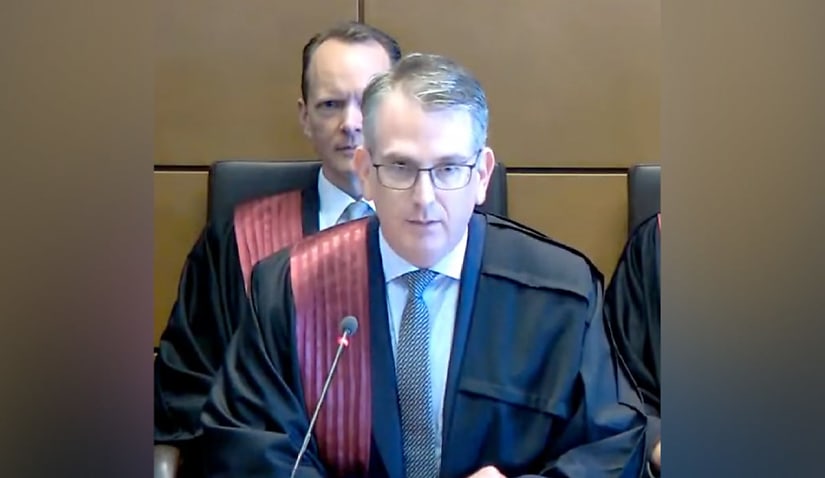
In reflecting on these tactics in a speech delivered at the Bar Association of Queensland’s annual conference, Justice Nicholas Owens of the Federal Court of Australia said the trick to becoming a better cross-examiner is to “liberate yourself from the unrealistic expectations engendered by the stories of great cross-examinations”.
If counsel lose sight of the fact that cross-examination requires careful and precise thinking and instead treat it as “one-on-one combat”, it is likely the examination “will be both misguided and ineffective”.
“While no one would suggest that cross-examination is required to be a pleasant experience for witnesses, any unpleasantness should be limited to the inevitable consequences of legitimate questions designed to get to the truth of the matter,” Justice Owens said.
“It is a fallacy, in my view, to think that rough treatment is likely to lead to more reliable evidence – or that courts or juries will assume that the evidence of a witness who is affected by such treatment has been substantively undermined.”
While it is not common to come across a barrister who has employed the brutal tactics of the past, Justice Owens said it is “far from rare” to see counsel take an approach “consisting of not much more than forcefully putting to the witness that they are lying, coupled with questioning about conduct and events of little or no relevance other than the light they are said to shed on the witness’ general credit”.
Those attacks are often paired with a “display of incredulity and disdain in relation to the answers that are given, which tends to convey, whether intentionally or not, the barrister’s personal view that no credence could possibly be placed on what has been said”, Justice Owens said.
Justice Owens said cross-examinations conducted in an aggressive manner, and do not afford the witness a fair opportunity to give evidence, work against the examination’s fundamental objective.
“If you conduct your cross-examination in a manner that is not conducive to fairly testing the witness’ evidence, it is likely that such victories as you consider you have won will not be as meaningful as you might think,” Justice Owens said.
For example, “apparent” admissions secured from witnesses who have become “muddled or paralysed after being browbeaten” is not a win, and the same can be said of the “intemperate outbursts” from witnesses who have been subjected to “significant provocation”.
“On the other hand, if you are able to calmly and forensically dismantle the witness’ evidence, you will have achieved a very great deal,” he said.
Justice Owens went on to say the manner in which barristers conduct cross-examinations should be consistent with their status as an officer of the court, “who is under no circumstances to be personally associated with the cause in which you are briefed to appear”.
Their role is to only present the client’s case as effectively as possible, and consistent with their professional obligations.
“It is thus inconsistent with your role for you to express in any way your personal view of the witness you are cross-examining, or the evidence that they are giving,” Justice Owens said.
“It follows, in my view, that questions, let alone comments, that are either worded, or conveyed in a manner or tone, so as to imply that it is counsel’s personal view that the evidence being given by the witness is not credible, are entirely inappropriate.”
Witnesses will be more cooperative and prone to saying things helpful to the case if the barrister is polite, Justice Owens added.
Further, unless given good reason to react differently, the natural and instinctive sympathy of judges and juries in a contest between counsel and a witness “will lie with the witness”.
“There is really very little to be gained by conducting your cross-examinations in anything other than a calm and polite manner,” Justice Owens said.
The speech can be read in full here.

