

Powered by
MOMENTUM
MEDIA

The South Australian government’s “disappointing” budget announcements have shown just how low the justice system ranks on its list of priorities, the Law Society complained.
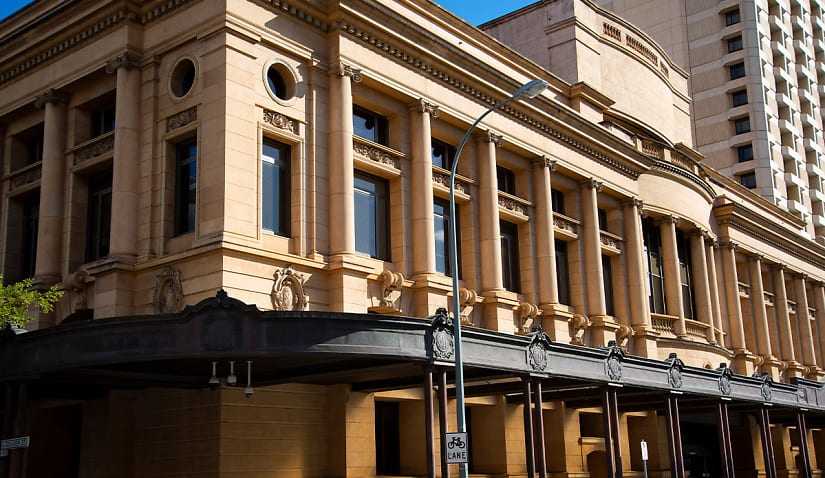

Ahead of South Australia’s 2026–27 state budget this Thursday, 4 June, the Law Society has called for funding to be allocated to the court system to address its deteriorating and inefficient buildings.
The state’s busiest court, the District Court, is housed in “bad condition” at the Sir Samuel Way Building in Victoria Square, and the Supreme Court does not have the facilities to hold criminal trials.
Some courtrooms do not have wheelchair access, there are no suitable trauma-informed rooms for vulnerable witnesses, and the Youth Court is “unwelcoming and intimidating” for young defendants and witnesses, Law Society president David Colovic said.
The latter’s holding cells were deemed “harmful to child and young people and fall below acceptable minimum standards of safety, dignity and care”, according to a Youth Training Centre Visitor report.
On top of that, the Royal Commission into Domestic, Family and Sexual Violence identified the “serious lack of space” for victims and other vulnerable court users, the president said.
“The fact is that the state’s court facilities, especially in the central precinct, are archaic, at risk of structural failure, and barely fit for purpose,” Colovic said in a statement to media.
A sum of $200 million would “go a long way” towards addressing the most critical issues in the courts, and the Law Society would welcome a thorough evaluation of the justice system’s future needs and a commitment to future-proofing courtrooms.
However, prior budgets “have taught us not to get our hopes up”.
“We hold out hope that the government finally acknowledges the dire need for a justice infrastructure that is fit for purpose and can serve the needs of the community,” Colovic said.
The last major investment was the $500 million revamp in 2013, but the proposal was shelved in 2015. What followed was just $31 million to make repairs to the Supreme Court and Sir Samuel Way buildings.
“Court buildings are not recreational facilities or tourist attractions. They are not ‘nice to haves’ – they are essential pieces of civil infrastructure,” Colovic said.
“These are the places in which justice is administered, where laws are tested, where people exercise their fundamental rights.
“They should be afforded appropriate priority.”

