

Powered by
MOMENTUM
MEDIA

Delaying justice can be a form of cruelty. In both law and psychology, the manipulation of time is more than procrastination; it’s power, writes Rebecca Ward, MBA.
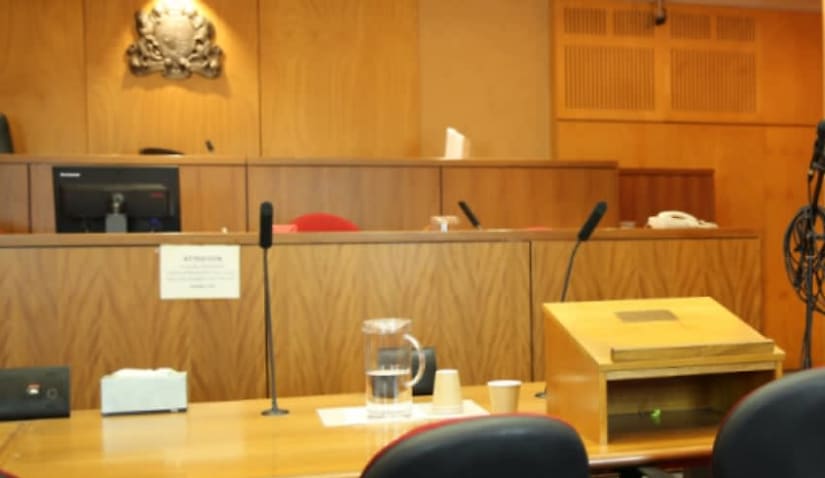

Humans tend to view time as neutral, a ticking clock, a shared structure. But in relationships, organisations, and legal processes, time can be twisted. It can be used to stall, to exhaust, or to dominate. In psychology, this weaponisation of delay often signals the presence of Dark Tetrad traits: narcissism, Machiavellianism, psychopathy, and sadism. For courts and lawyers, understanding this behaviour is crucial. Because when someone delays just to watch you squirm, it’s not poor time management. It’s control.
Delay as a power move
In legal contexts, delay is often interpreted through a procedural lens: missing deadlines, adjournment games, and refusal to settle. But behind many delays is not chaos, but intent. A calculated choice to obstruct, disempower, or frustrate the other party.
Machiavellian personalities, in particular, use delay as a strategy. They know that the longer something is dragged out, the more likely the opposition is to give up or compromise. Psychopaths, on the other hand, aren’t necessarily planners, but they enjoy watching others suffer. They may delay replying to an urgent email or withhold information just to see how panicked you become. It’s not that they’re late. It’s that your suffering is their entertainment.
The psychology of temporal distortion
In trauma psychology, delay can be destabilising. Victims of narcissistic abuse often describe waiting as agony, for a reply, for an apology, for closure. The mind fills in blanks with worst-case scenarios. The passage of time becomes elastic. One minute feels like an hour. This is not imagined. It’s the nervous system stuck in high alert, with cortisol surges and disrupted circadian rhythms.
Delays aren’t neutral when there’s an imbalance of power. A senior partner who withholds feedback for weeks can create panic in a junior associate. A litigant who doesn’t show up to mediation causes emotional whiplash. A parent who says, “I’ll think about it” and disappears for days is not neutral. They’re avoiding accountability, leaving the other party in limbo, a form of low-grade psychological torture.
Legal systems and the cost of delay
The legal system is often burdened with unavoidable delay. But some actors exploit this. They file unnecessary motions, “forget” to disclose key documents, or spin out timelines with a smile. In family law, these tactics wear down the other parent. In personal injury claims, delay advantages the defendant. Evidence degrades, memories fade, and people die.
Under Australia’s Uniform Civil Procedure Rules, judges have the power to manage timelines, strike out claims, or award costs for delay. But often, by the time the court intervenes, the damage, emotional, financial, and relational, is already done. In some cases, justice delayed really is justice denied. This concern was also addressed by the High Court in Aon Risk Services Australia Ltd v Australian National University (2009) 239 CLR 175, where it found that delay tactics, such as last-minute amendments, could cause significant prejudice, waste resources, and compromise the integrity of the litigation process.
Is it bad time management or malice?
Not all delay is pathological. Life happens. But there are signs that a delay is more than disorganisation. Repeated lateness after confrontation. A pattern of silence during conflict. Or a bizarre mix of grand promises and no follow-through. These are red flags, not quirks. People with narcissistic traits often use time as a control mechanism. They’ll keep you waiting just long enough to make you feel insecure, then show up with charm. It resets the dynamic. You feel grateful. They feel powerful.
The legal weaponisation of delay
Delays can be used in bad-faith litigation to wear down the opposition. But more insidiously, delay also functions as plausible deniability. “I didn’t mean to miss the deadline,” “I didn’t see your email,” or “I thought we were on the same page.” It’s hard to prove intent. That’s what makes it clever. But courts are starting to catch on. In CIV-18-03247 (NSW District Court), the judge noted a “pattern of calculated procedural delay … not attributable to oversight, but to tactical advantage”. While that ruling was about scheduling, the implications were deeper: time, when misused, is a tool of psychological and legal warfare.
Conclusion: Time as a litmus test for integrity
In both relationships and legal systems, how people handle time reveals their ethics. Do they respond promptly, clarify misunderstandings, and show up on time? Or do they withhold, delay, and disappear, only to reappear with excuses and charm? Lawyers are trained to look for patterns. In court, a delay isn’t always a red flag. But when it’s consistent, strategic, and emotionally costly to the other side, it may be time to ask: Is this incompetence, or is it cruelty? Because sometimes, the longest silence is the loudest statement of power.
Rebecca Ward is an MBA-qualified management consultant with a focus on mental health. She is the managing director of Barristers’ Health, which supports the legal profession through management consulting and psychotherapy. Barristers’ Health was founded in memory of her brother, Steven Ward, LLB.
