

Powered by
MOMENTUM
MEDIA

More than 200 legal experts, academics, and music industry professionals are calling for clear statutory safeguards to prevent music lyrics from being used as evidence in criminal trials.
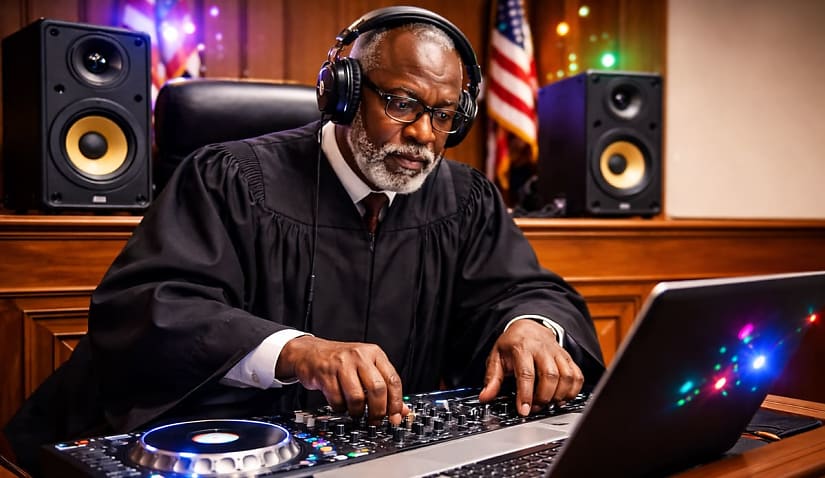

A coalition of 214 legal experts, academics, music industry figures, and human rights campaigners has united to press the UK government to introduce stricter safeguards on the use of music as evidence in criminal trials.
Under current law, prosecutors are able to rely on lyrics written by defendants – and even their appearances in music videos – as evidence of alleged gang affiliation or involvement in criminal activity.
In an open letter to the Secretary of State for Justice, spearheaded by the campaign group Art Not Evidence, the coalition voiced serious concern over how rap and drill music are being interpreted in court, warning that the practice risks miscarriages of justice and disproportionately targets young Black men.
The letter highlights what it describes as an “alarming new soundtrack” emerging in courtrooms, where police and prosecutors are using the act of writing, performing, or even engaging with rap music to “suggest motive, intention or propensity for criminal behaviour” – despite many of these creative works having no direct connection to the alleged offences.
Campaigners warn that such material is often used to construct a misleading narrative, effectively conflating artistic expression with literal evidence and blurring the line between performance and proof.
Research cited in the letter highlights the scale of the issue, with journalists and academics identifying more than 100 UK cases since 2005 in which rap music has been used as evidence in court.
Alarmingly, the letter also notes that in the past three years alone, at least 240 people have faced trial at least in part because of their engagement with rap music.
The open letter warns that this trend not only risks wrongful convictions but also “perpetuates harmful racist stereotypes, and contributes to a racially discriminatory criminal justice system that stifles creativity and freedom of expression”.
The renewed push for legal reform follows the tabling of proposed amendments to the Victims and Courts Bill by Labour peer Baroness Shami Chakrabarti, which was debated in the House of Lords on 11 February.
If passed, the Criminal Evidence (Creative and Artistic Expression) Bill would introduce statutory safeguards ensuring that creative works are admitted in court only when they have a direct connection to the alleged crime, are relevant to a disputed fact, and cannot be proven through other evidence.
Art Not Evidence pointed to recent US reforms in its open letter, citing California laws that limit the use of artistic content in criminal proceedings as a potential blueprint for safeguards the UK could adopt.
The open letter urged urgent law reform, calling for creative works to be admitted in court only when directly relevant to the alleged offence, rather than used as a convenient shortcut by police and prosecutors in the “pursuit of convictions”.

