

Powered by
MOMENTUM
MEDIA

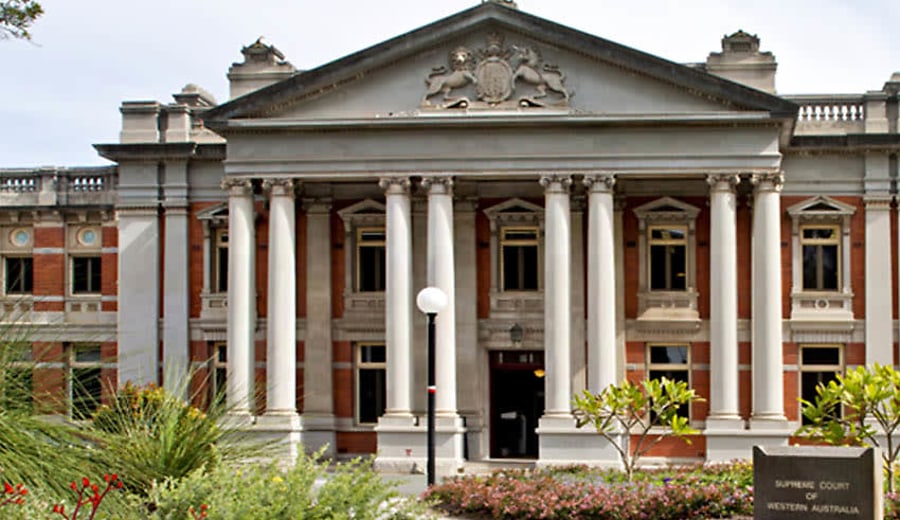
A Supreme Court dismissed an application that would have reignited a lawyer’s attempts to recover his practising certificate, which was refused years earlier on the grounds that he was not a fit and proper person.

Jeremy Richard Ludlow had yet another setback in his efforts to overturn a decision of the Legal Practice Board of Western Australia not to grant him a practising certificate for the 2023–24 financial year.
The Perth lawyer first applied for a review in the State Administrative Tribunal, which was delayed by an application that sought to have the board state whether it admitted to various allegations concerning their interactions, including complaints made by the board to Ludlow.
This application was dismissed and replaced by one from the board in September 2025 that sought to have Ludlow’s review dismissed on the basis it was “frivolous, misconceived and lacking in substance”.
The board argued the decision under review related to an application for a practising certificate for the FY23–24, and the tribunal was confined to dealing with an application in respect of that year.
As a result, any decision by the tribunal to grant a practising certificate in September 2025 would not have had an operative effect.
The board’s strike-out application was granted in November 2025.
On appeal before the West Australian Supreme Court, Ludlow advanced nine grounds of appeal that were “prolix and argumentative”.
He alleged two core propositions: the first that the tribunal failed to find it had the power to grant a practising certificate that would take effect from the date of the decision; and the second that the president should have held it was not appropriate to strike out the review application.
As part of these arguments, Ludlow submitted that he had no power to specify how long either the board would take to determine his application or the tribunal would take to determine his review.
The Supreme Court said this did not justify construing the legislation to give the tribunal power to grant a practising certificate for a financial year that was not the subject of the application refused by Ludlow.
“While the appellant does not control these matters, one of the main objectives of the tribunal … is to act speedily and with as little formality as is practicable. Section 32 of the [State Administrative Tribunal] Act confers various powers on the tribunal which are evidently designed to facilitate achievement of this objective,” the court said.
“In a case such as the present, it is to be expected that the tribunal will exercise its powers to attempt to ensure that the review application is not rendered redundant by the passage of time.”
At the time of the tribunal’s decision, the earliest the review could have been heard and determined was in the 2025–26 financial year.
The court said the president was correct to conclude that success in the review application could never allow Ludlow to practise under a practising certificate granted by the tribunal, or the renewal of a practising certificate granted by the tribunal.
“That aspect of the tribunal’s decision is not attended by sufficient doubt to justify the grant of leave to appeal,” the court said.
Another focus of Ludlow’s application was the board’s statement within its 2023–24 refusal decision that he would have to change his behaviour if he wanted to hold a practising certificate.
Ludlow, who said he is “not willing to change his behaviour”, sought to contend that this observation was not justified.
“However, the right of a review conferred by section 100 of the Uniform Law is relevantly of a decision to refuse to grant a practising certificate rather than the reasons for the decision, or comments made when advising a practitioner of the decision,” the court said.
“There would be no imperative for the tribunal to make any finding about the respondent’s observation if it were to determine the current review application. The observation will not be binding on the parties or the tribunal in any subsequent proceedings, including a future application for a practising certificate.”
Ludlow was ordered to pay costs in the sum of $1,000.
Citation: Ludlow v Legal Practice Board [2026] WASCA 79.

