

Powered by
MOMENTUM
MEDIA

A former lawyer criticised for his failure to appropriately reflect on his past misconduct has again been condemned by a justice of the NSW Supreme Court, this time for an application that had the potential of impeding the administration of justice.
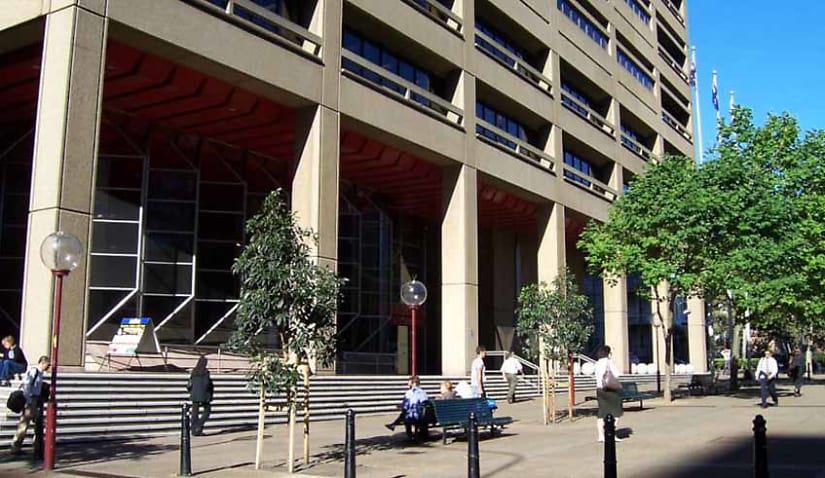

Earlier this month, acting Justice Michael Elkaim dismissed a summons brought by Senarath Bandara Chanaka Senanayake that sought to challenge multiple refusals of the NSW Law Society to renew his practising certificate between 2020 and 2025.
The refusals followed a decision of the Migration Agents Registration Authority (MARA) to cancel his agent registration over “concerns of potentially duplicated and template-based production claims”. A review in the Administrative Appeals Tribunal (AAT) failed.
Acting Justice Elkaim said Senanayake was “clearly not interested in remorse because he believes there is nothing to be sorry about”.
“There is even a degree of arrogance in his attitude to the extent that he has made no attempt to persuade the defendant of any failings in the above decisions, instead suggesting that prima facie deficiencies (whatever they might be) are enough to found success in his application,” acting Justice Elkaim said.
Days after acting Justice Elkaim’s decision, Senanayake filed a motion seeking to vary three parts of the judgment, to correct some asserted errors, and for the making of a suppression order.
During the hearing of the motion, Senanayake claimed changing the judgment would “remove an unjust result” and would achieve “a balance between the public interest and the principles of fairness, proportionality and the proper administration of justice”.
Acting Justice Elkaim disagreed.
“Changing a judgment to meet the wishes of a disgruntled litigant is not part of the administration of justice. If anything, it impedes the administration of justice,” he said in his written decision.
“In addition, the declarations sought in the notice of motion have no sound basis, are not necessary (even if substantiated), or in the case of the declaration for the granting of a practising certificate, is an attempt to intrude upon the defendant’s statutory function of regulating the legal profession.”
One such change concerned a line in acting Justice Elkaim’s judgment in which the senior judge said the Law Society put Senanayake in touch with a respected expert in regulatory matters. Senanayake wanted this to read that he independently chose the expert after the Law Society advised him to obtain advice from a conduct advisory panel.
In the absence of the asserted error having any relevance, “let alone existence”, acting Justice Elkaim refused to make the change.
Senanayake also sought to have comments about his good behaviour and the loss of his registration amended to reflect he was denied a practising certificate and could not practice for “a further six years”.
Given that what was originally said was in Senanayake’s favour, acting Justice Elkaim again denied there being a basis for the correction.
A request by Senanayake that the judgment reflect “the amount of money” he spent on the proceedings was also tossed.
“There is no possible basis upon which I could, or in fact would, carry out a reconsideration of the judgment on the basis of the amount of money and ‘other steps’ taken to obtain a practising certificate.
“The plaintiff’s endeavour for a revision or reconsideration is entirely misconceived and certainly does not fall within the powers given to me to amend my reasons,” acting Justice Elkaim said.
Acting Justice Elkaim added it was clear from the summons that Senanayake still did not understand that the MARA and AAT findings were “much more widespread” than a simple template issue.
“The plaintiff continues to lack the insight which was at the core of the defendant’s refusal of his applications, and squarely part of my findings against him,” acting Justice Elkaim said.
“The plaintiff may well believe my decision is wrong, but that is not a basis for coming back to me to change my judgment.”
The suppression order application was also refused.
Citation: Senanayake v Law Society of NSW (No 2) [2026] NSWSC 838.

