

Powered by
MOMENTUM
MEDIA

The assistant commissioner of Victoria Police had a “misunderstanding of the law” when he authorised a six-month declaration that allowed for warrantless searches in the Melbourne CBD, organisers behind the upcoming Invasion Day protest told the Federal Court.
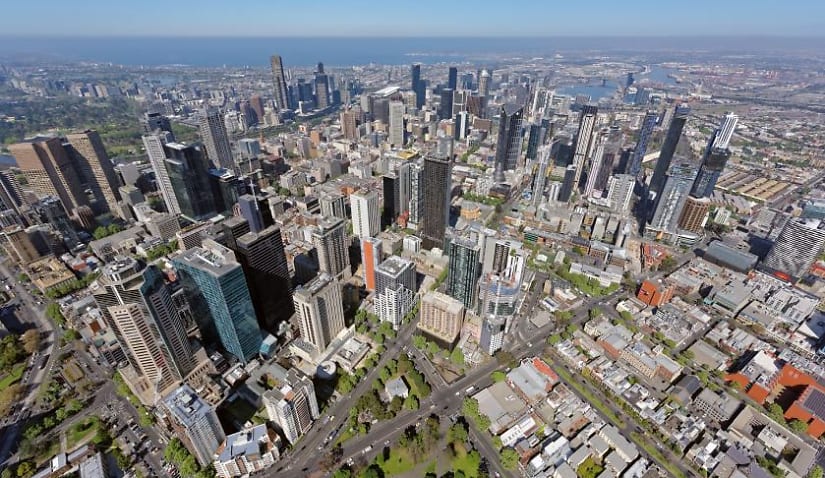

Thomas Wood, counsel for Invasion Day rally organiser Tarneen Onus Browne, said Victoria Police Assistant Commissioner Brett John Curran’s state of mind was “incorrect” when he authorised the Melbourne CBD-wide declaration on 24 November.
It authorised police and protective service officers to search without warrant and request that people remove face coverings. Those who refused were at risk of arrest and removal from the area.
Originally planned for six months, the declaration came to an end on 9 January, just days before the first court appearance.
Questioned on how he came to the decision, Curran said he checked various authorities and had discussions “around length of the declaration and size of the declaration”. He added it was the first time he made a declaration that would last longer than 24 hours.
At the heart of the dispute is the construction of section 10D of the Control of Weapons Act 1990, which allows for a chief commissioner to declare an area as a designated area if they are satisfied that more than one incident of violence or disorder occurred in the last 12 months, and there is a likelihood that violence or disorder would recur.
They must also be satisfied that it is necessary to designate an area for the purpose of allowing officers to exercise search powers.
Curran said he read the sections “various times” after being asked to review whether police could make a six-month declaration.
“I looked at those sections, and I had a copy of the relevant sections because I had never done a declaration of that length before, just to make sure it was right,” Curran said under cross-examination.
Asked why the declaration was brought to an early end, Curran said he would have the opportunity to make a new declaration and reconsider aspects of the Charter of Human Rights and Responsibilities Act 2006.
Wood alleged there was “something wrong” in how Curran applied each of the criteria under section 10D of the Weapons Act.
“He did so on a misunderstanding of the law, or in fact didn’t form the state of satisfaction that is required,” Wood told the Federal Court.
Wood and lawyers for Victoria Police have clashed on the construction of the act, but Wood claimed that neither of their versions “is consistent with the version the assistant commissioner adopted”.
On the protestors’ case, there was no evidence that Curran considered why asking the designated area declaration was “necessary in its ordinary meaning of essential or indispensable for the purpose of enabling police to exercise no suspicion search powers”.
In protest of Wood’s submission that the word “necessary” is synonymous with “essential”, Sarah Keating SC said the authorities offer “different shades of meaning and is contingent on the context”.
In this case, Keating said necessary “cannot mean absolutely necessary”.
“If that were the correct construction, it would be hard to see how randomised searches would ever be essential or unavoidable with the detection of a future threat. Necessary in this case must be subjected to a touchstone of reasonableness,” Keating said.
Keating went on to say Curran was right to conclude it was reasonably necessary to impose the declaration.
Justice Elizabeth Bennett reserved her decision but said it would be handed down before 26 January.

