

Powered by
MOMENTUM
MEDIA

A tribunal refused to permit a Victorian barrister with a laundry list of misconduct to hold a practising certificate before late 2027.
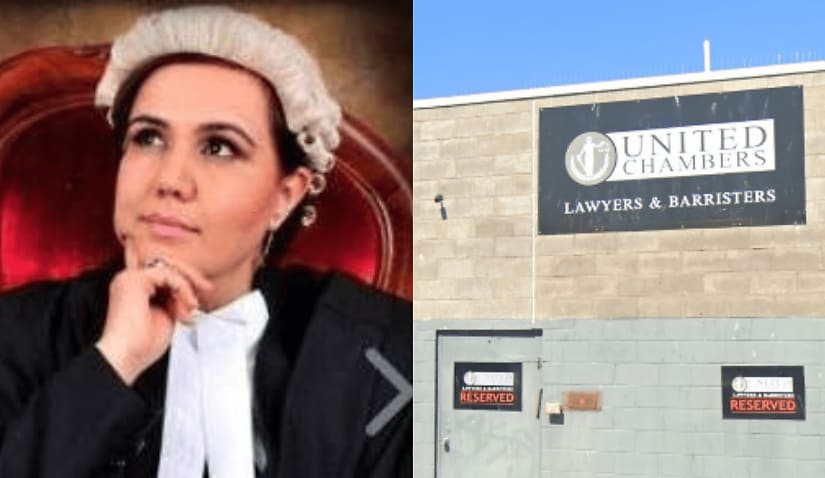

The Victorian Civil and Administrative Tribunal affirmed the decision of the Victorian Bar to refuse Roona Nida Fazal’s August 2021 and May 2023 applications to renew her practising certificate.
The decision was based on disclosure failures, Nida’s engagement in legal practice when she was not entitled to do so, and two separate findings of unsatisfactory professional conduct.
Hearing the matter as a de novo review, senior member Jonathan Smithers said he was “clearly satisfied” Nida did not establish her onus of establishing she was a fit and proper person.
“Indeed, in my view, the evidence establishes positively that she is not currently a fit and proper person to hold a [practising certificate],” Smithers said in a decision published earlier this month.
Nida, the first Afghan-born female legal practitioner in Victoria, worked without issue between 2005 and January 2016, when a complaint was made concerning alleged non-compliance with her obligations regarding the handling of trust monies.
This resolved with an unsatisfactory professional conduct finding.
Two and a half years later, Nida was convicted of failing to remain at a police station for a breath test and driving an unregistered vehicle.
In March 2019, a creditor’s petition was issued against Nida concerning unpaid legal fees on behalf of her sons, who encountered problems when they set out to establish a Sportsco franchise.
Nida did not inform the Victorian Legal Services Board and stated there were no “fit-and-proper” matters or show-cause matters applicable to her in an April 2019 practising certificate application.
A second complaint was made about Nida in January 2020, this time on behalf of a disgruntled former criminal client who alleged she had failed to take proper instructions on a guilty plea.
An unsatisfactory professional conduct finding was made in late 2020.
Sequestration orders were made against Nida in December 2020, and she has since maintained multiple proceedings to challenge them.
Following Nida’s 2021 application to renew her practising certificate, the board requested further information about her charges, convictions or findings of guilt, the reason she failed to disclose her bankruptcy, and why she did not disclose the client complaint.
Nida missed several deadlines but cited family turmoil, including the arrest of her older son and criminal proceedings for her younger son.
The Bar informed her in August 2021 that it refused to renew her practising certificate, meaning she was not entitled to practise law.
Despite this, Nida acted and appeared in proceedings between September 2021 and March 2022, including two criminal proceedings in the Supreme Court of Tasmania and one in Victoria.
In the days before she was due to appear at a bail hearing for the Victorian client in late 2021, the board became aware that Nida was engaging in legal practice, told her she was not entitled to do so, and requested that she sign an undertaking to that effect.
In response, Nida said: “Thank you for threatening me for bringing legal action against me and looking forward to meeting all those from whom I have been receiving similar threats in Supreme Court and High Court. Public will enjoy and benefit from this.”
The board appeared at the bail application and made a successful oral application for injunctive relief to prevent Nida from acting.
In February 2023, a court found Nida guilty of civil contempt for purporting to act as the legal representative for her son in an interpleader summons proceedings in the Magistrates Court.
The civil contempt finding also related to Nida’s representation that she was entitled to practise by identifying herself as a barrister.
Since the findings, Nida has failed to comply with several court orders, including an injunction order that she remove references on social media that indicated she is entitled to practise.
The social media references were still online at the time of writing.
Smithers noted Nida frequently responded to questions in cross-examination by saying things such as “it’s in my affidavit”, and then expecting others to find the “needle in the haystack”.
Given that the tribunal book was so large, and included a “great deal of affidavit material from her”, Smithers said it did not help her case.
Neither did the “sense of grievance” within her evidence, including early family circumstances, establishing herself as a barrister, and dealing with her sons’ troubles with the law and mental health.
Nida also had difficulty viewing her own conduct objectively in the context of her professional obligations, Smithers observed.
“There is a sense that the hardships she has endured (which are certainly real), combined with the injustices she perceives that she (and some of her clients), have suffered (which is much less clear) provide an excuse for not complying with her professional obligations, and the norms applicable to professional colleagues,” Smithers said.
Evidence sways in favour of VicBar, board
With respect to Nida engaging in practice when she was not entitled to do so, Smithers said the evidence “overwhelmingly” established Nida was aware of this obligation in late 2021 but chose to do so anyway.
Smithers said any practitioner “acting sensibly” would have adhered to the warnings from the regulator, rather than having the board take the “unusual step” of obtaining a Supreme Court injunction.
Referring to references online, Nida said she “made some efforts” to remove them and has since done “all she can” to comply.
“These [efforts] were not commensurate with the gravity of her situation. A conscientious practitioner would have been anxious to take whatever steps were necessary to remove such references.
“Nida’s efforts fell well short of that,” Smithers said.
Moving on to the non-disclosures to the board, Smithers said these were relevant to the question of whether she was fit and proper.
At the date of final submissions, filed in January 2025, Nida conceded she was still insolvent under administration and indicated an appeal in relation to the bankruptcy was on foot.
Nida submitted that the tribunal should not conclude that her bankruptcy adversely impacted her fitness to engage in legal practice.
However, Nida’s evidence comprised assertions that were not backed up by hard evidence, and she made “non-specific claims” that documents were tampered with to disadvantage her.
“Bankruptcy per se does not necessarily militate against her being a fit and proper person to practise. But the evidence belies her suggestion that she has faced up to the reality of her situation and is endeavouring to resolve it,” Smithers said.
Smithers also noted there was a “substantial body of disapproving commentary by a large number of judges and tribunal members”, which amounted to a “very disturbing edifice of critical responses”.
The board also submitted that Nida has a tendency to make allegations of conspiracy against judicial officers, regulators and their employees, police officers, and other participants in the legal system.
While she is obliged to hold beliefs that she and clients have been unfairly treated, Smithers said she must produce evidence and take proper steps to make good her claims.
“It is not a responsible position for a legal practitioner to take, simply to continue to reiterate her allegations, but not to take any proper legal steps to make them good,” Smithers said.
“Treating colleagues, the courts and the regulator with respect is an important aspect of her obligations. The effective operation of our legal system depends on respecting the roles that such persons or bodies play, and co-operating with them.”
While Nida conceded some matters, Smithers noted she continued to downplay serious issues, including those that gave rise to the injunction and the civil contempt finding against her.
Nida has also persisted with “non-specific and unproved” allegations, has refused to accept her “non-cooperative and belligerent” responses to the regulator were inappropriate, and continues to act as though her situation has entitled her to exceptional treatment.
Smithers said there was no view to conclude Nida will overcome her present position of not being a fit and proper person to hold a practising certificate “at any time in the near future”.
He said he was sceptical as to whether she will be in five years, but has determined to impose a period of four years during which she cannot apply for a practising certificate, due to expire in October 2027.
“Of course, Nida will need to satisfy the regulator that she has become a fit and proper person, in the event she seeks to obtain a practising certificate after that period has expired, especially if she seeks to obtain a practising certificate which is unconditional.
“This will require her to take meaningful and effective steps to address the significant considerations militating against the conclusions which are set out in this decision,” Smithers said.
The case: Fazal v Victorian Legal Services Board (Legal Practice) [2026] VCAT 25.

