

Powered by
MOMENTUM
MEDIA

Victoria’s Koori Court has become a model for culturally informed justice across Australia. As similar programs spread nationwide, Magistrate Rose Falla tells Lawyers Weekly what the next steps are and what mainstream courtrooms could be doing better.
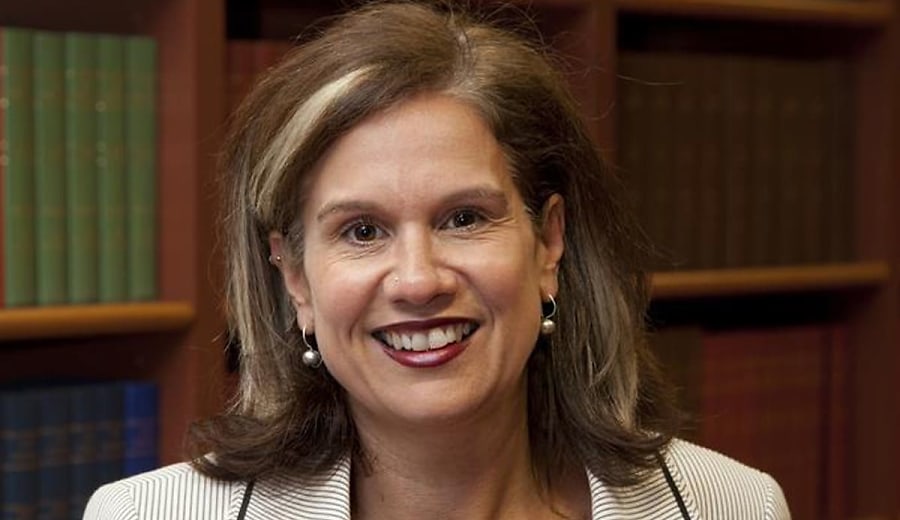

The supervising magistrate for Koori Justice at the Magistrates Court of Victoria, Magistrate Rose Falla (Wotjobaluk, Wemba Wemba and Mutti Mutti woman), said bringing a culturally informed approach to First Nations justice “is as simple as humanity, dignity and respect”.
Since first opening in 2002 at Shepparton, the Koori Court has invited the accused person – who has pleaded guilty to an offence other than family or sexual violence – to sit at an oval table with a magistrate, elders, lawyers and the prosecutor, and the community.
It has since expanded to 17 Magistrates Courts across Victoria and was introduced into the county and children’s courts. It has also inspired similarly culturally informed courtrooms across the country, including the ACT Supreme Court’s pilot Circle Sentencing List.
At the Bugmy Bar Book’s Solution Focused Justice Symposium in mid-February, the Koori Court was praised for its success. Judge David Sexton from the County Court of Victoria said it was a “leader in solution-focused justice” and held in “very, very high regard”.
Appearing on the same panel, Falla said First Nations people drive the conversation and make culture and Aboriginal lore “central to the discussion, which has been missing historically”. The court also restores cultural practices that were not previously recognised.
Referring to the 33 Aboriginal and Torres Strait Islander people who have died in custody in the 12 months to June 2025 – a record-high since 1979 – Falla said it “must motivate” the judiciary to look into new ways to apply the law. But, she said, it will “take time”.
“If you’re going to take some of these principles into the mainstream courts, you have got to exercise patience,” Falla added.
“We aim to be an alternative to custody and focus on rehabilitation. It’s not to say jail is not imposed … but just for a moment, imagine how dire those statistics would be if we didn’t have these protocols, if we didn’t have solutions-focused approaches.”
In conversation with Lawyers Weekly at the event, Falla echoed a sentiment shared by several speakers: that while a crime may have brought a First Nations person to the court, there are culturally sensitive factors that have shaped their behaviour.
Provided with an informed court process that relies on the knowledge of community leaders and experts, the accused person is far more likely to engage with the justice system and embrace rehabilitation.
With that in mind, judicial officers should consider their approach, including how they may appear to the accused.
“[For me] it is about recognition of my language with the person I approach: am I appearing so formal there’s a level of intimidation there, how can I put that person at ease so that their goal is to engage in the process as much as possible?” Falla said.
“The worst thing that could happen is if they walk out and say, ‘What just happened?’ or the process is so quick they don’t know what’s happened, or because the lawyers have done all the speaking.”
While many of the newest specialist courts are based in metropolitan areas, Falla said it is “really critical” that culturally informed justice is also brought to regional locations. By doing so, the accused person is able to rely on the assistance of their local elders and community.
In addition to providing these local solutions, Falla said it is “also dismissing that access-to-justice issue because it is available to more”.
“You have elders dealing with local people who are coming before the courts, and they know the tensions, the difficulties, how the offending is impacting the local community firsthand,” Falla said.
Further, having wraparound services like those offered through Koori Court can significantly alter justice outcomes for First Nations people far more than stricter bail laws or harsher sentencing.
“What a better way to achieve success, and that might be more cost-effective, than having these programs rather than jailing people, because people do serve these sentences and are released into the community, and it becomes a question of: are they rehabilitated, or is more harm than good being done?” Falla said.
“We need to expand and do things differently. We are always looking to find ways that can enhance the process for court users.”
As for next steps, Falla said the Koori Court has a number of plans to improve First Nations justice even further, starting with the current implementation of family violence offences – but specifically breaches of intervention orders – into the program.
The Koori Court will also monitor community discussions on its eligibility and criteria, headed up by the Aboriginal Justice Caucus. Falla said the court will be involved in the process “in due course”.
Falla said she was also interested in embedding more First Nations culture in other courts, like drug and alcohol courts. For example, Koori Court participants who graduate through the various stages of these programs are gifted with region-specific possum-skin cloaks.
By the end of the program, the participant will be gifted with the whole cloak “as symbolism of what they have achieved”.
“If a person feels sufficiently supported from a clinical base as well as a cultural base, then the likelihood of success is greater,” Falla said.

