

Powered by
MOMENTUM
MEDIA

The silks behind Rebel Wilson and Charlotte MacInnes defamation trial have clashed over the serious harm parameters, including whether the latter’s allegedly blossoming career should be considered against her.
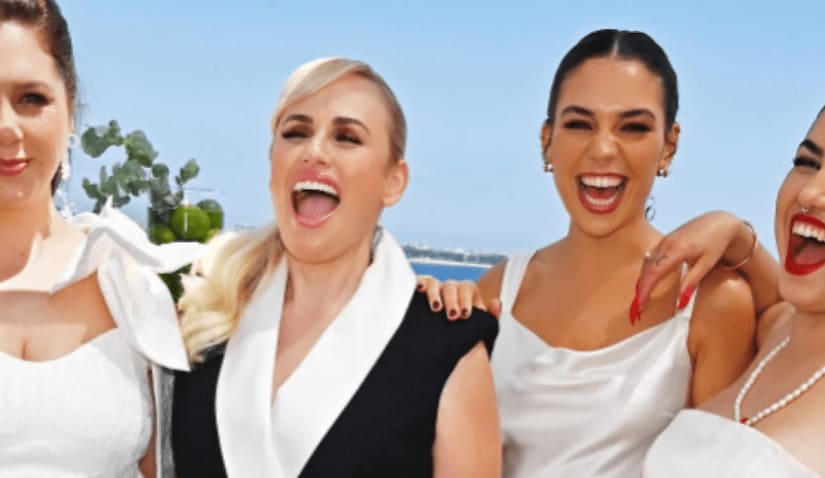
Source: Instagram - @rebelwilson

Closing submissions heard on Friday, 8 May, have brought an end to Charlotte MacInnes’ defamation trial against Rebel Wilson for Instagram posts that alleged she had covered up a harassment claim to further her career and blocked the release of the film, The Deb.
The two-week trial delved into the events surrounding a bath MacInnes shared with international producer Amanda Ghost after the latter suffered a medical incident on Bondi Beach on 5 September 2023. Both women remained in their swimwear.
According to the Pitch Perfect star, MacInnes complained the following day that Ghost asked her to share a bath and shower with her, and this had made her “feel uncomfortable”. MacInnes has denied that this conversation occurred or that a complaint was ever made.
As discussed on Friday, whether serious harm – or the likelihood of serious harm – can be established will turn on which jurisdiction Justice Elizabeth Raper finds MacInnes suffered the most damage.
The Defamation Act 2005 is uniform across all states and territories except Western Australia, where the serious harm test has not been implemented. If West Australian law is applicable, MacInnes will not have to prove her reputation suffered, or likely suffered, serious harm.
Sue Chrysanthou SC, appearing for MacInnes, said “more people” know her client in Western Australia because “that’s where she grew up, that’s where she went to school, that’s where she had her tertiary study”. Comparatively, the silk said MacInnes only lived in Sydney twice.
On Wilson’s case, as advanced by Dauid Sibtain SC, the only substantive law with any real connection is in NSW.
“For the reason that a) she moved here, b) all the conduct took place here, c) she sued in the registry here – that probably doesn’t matter so much – and then d) after that she left for overseas,” Sibtain said.
“It is clear and almost unarguable that any harm has been occasioned to the reputation of the young women who moved to NSW in 2021, conducted a professional career in Australia in 2021, and thereafter has since that time conducted an international career.”
Their cases also differ on the establishment of likelihood, first brought up after an exchange between Chrysanthou and Justice Raper on whether MacInnes has joined career success “despite the storm” brought on by Wilson’s allegedly defamatory posts.
Chrysanthou said it would be impossible to prove how MacInnes, a “brand-new actress”, would have fared had the defamation never occurred. While it was submitted that MacInnes has not had any work since The Deb and a Gatsby stage production, there was no evidence before the court that opportunities were stripped from her.
Nevertheless, Chrysanthou argued likelihood should be assessed at the time of publication: “Was it likely to cause harm that a celebrity in Wilson’s position was making allegations against an unknown actress?”
“Your Honour can’t look at what’s happened [since] to assess likelihood, it’s two separate elements. Was it likely to cause harm at the time of publication, or did it cause serious harm? Those are two separate elements,” Chrysanthou said.
In response, Sibtain argued it is not “necessarily at the point of publication” because the court can also take into consideration the matters that have been established at the time of the trial.
“When it comes to time of the trial, the court will have evidence of the conduct as and from the date of publication up until the date of trial.
“What the court will have is evidence as to how the publication has, in fact, affected the reputation, and that is something that will inform the question of likelihood,” Sibtain said in his opening.
Sibtain also highlighted that MacInnes did not run her case on the basis that she lost certain filming or similar opportunities.
The final argument on credit
Chrysanthou and Wilson butt heads during cross-examination as the former questioned her version of events, picked apart alleged inconsistencies in the evidence, and sought to clarify some of the more sensational allegations, including that a “Russian oligarch billionaire” was funding proceedings in Australia and overseas.
In closing submissions, Chrysanthou alleged that much of Wilson’s evidence – on paper and during the tense cross-examination – has been at the detriment of her credit as a witness, which is “so overwhelming that a generalised credit submission can be made”.
“She’s a fantastical liar who has made up terrible, terrible allegations about multiple people, and her own witnesses have discredited her. We say Wilson cannot be believed on anything,” the silk said.
Chrysanthou said the court should consider the documents allegedly concealed from MacInnes’ legal team by Wilson, including text messages with The Agency Group employees and communications with her American lawyer. On the latter, Wilson claimed her own privilege, despite it never being raised with the applicant’s team.
Turning to the claims Wilson made, Chrysanthou said it “defies logic” for the actress to have alleged the bath incident made MacInnes uncomfortable when this was not challenged on the evidence.
On the uncontested version of the key events, Chrysanthou said there has been nothing sexual, there was a “massive medical incident”, no one felt uncomfortable, and Ghost’s assistant, Pia Ashcroft, walked in at one point and could not report there was anything “untoward”.
“One can hardly imagine a less sexy environment for sexual harassment to occur, shaking and hives and cups of tea by Ashcroft. It’s not exactly an environment where one would expect some sort of sexual approach; it defies logic,” Chrysanthou said.
“This is a huge credit point. Why would MacInnes at that point, on 6 September, lie about that to Wilson, because that is what it has to be. Why would MacInnes tell that lie to Wilson on that couch? That is not something my friends have grappled with at all.”
Chrysanthou said Wilson’s team have produced a “blow-by-blow” chronology of events, which sets out that by the time of the alleged complaint in late 2023, MacInnes had secured a music publishing deal with Warners and was being mentored by Ghost.
“Her music dreams are already coming true,” Chrysanthou said.
“Why would my client, on that couch in that studio with that background, tell this lie? And none of that is explored with her in cross-examination … it is not put to her that she in fact felt uncomfortable, it is not put to her she is making up some lie.
“What [are they] saying, that she had a brain snap? Why would she do this, why would she obliterate her relationship with Ghost on this day on a lie? That is the biggest problem with their case.”
Chrysanthou told Justice Raper that Wilson’s calling of her two international agents and Australia producer Greer Simpkin was a detriment to her case, with all three having “utterly contradicted” Wilson’s version of events on the “key facts in issue”.
Wilson claimed to have told all three about the alleged complaint on 6 or 7 September, but the agents said they learnt of it for the first time the following month, and Simpkin identified 13 September.
Chrysanthou went on to claim that Wilson realised she would have needed to raise the issue with an appropriate person after her interview on 60 Minutes, thus leading to the concoction of these conversations.
“At no point did Wilson take any steps as a responsible director to do anything proper about what she claims she was told,” Chrysanthou said.
It is MacInnes’ case that Wilson was upset with the younger star for allegedly leaking details of The Deb to writer Hannah Reilly and had sought to undermine her relationships with other cast and crew as a result. Particularly, she targeted MacInnes’ relationship with Ghost.
“At no point from 6 September until all of a sudden MacInnes is a victim on 8 October, at no point, not one document, not one utterance, one text message, not one act by Wilson which supports the proposition that Wilson considered that she had received a complaint of inappropriate behaviour or even a complaint that MacInnes felt uncomfortable,” Chrysanthou said.
“There is not one thing she did that supports that.”
In closing Wilson’s case, Sibtain strongly rejected “the submission that Simpkin obliterated my client’s evidence”, submitting that Simpkin’s evidence was, at least for one aspect, “on all fours with the documentary case, and is on all fours with Wilson’s case”.
Sibtain went on to say Simpkin – who, he stressed, was compelled to give evidence under subpoena – that her evidence on the timing she learnt of the complaint was “the best she could recall”.
“That does not mean Wilson’s evidence that she had a discussion with her … didn’t take place, it just means Simpkin did not give that evidence, that she could not recall it,” Sibtain sought to clarify.
Sibtain said it would be “preposterous” for Wilson to have made up a lie “that, within the space of a few minutes, could be checked” with a phone call between MacInnes and Ghost. Sibtain added that the two women were also living together at the time this all unfolded.
“It is entirely contrary to Wilson’s interests to take the course of trying to drive a wedge … she must have known the lie would be revealed in a heartbeat through a short phone call, but it wasn’t because it wasn’t a lie,” Sibtain said.

