

Powered by
MOMENTUM
MEDIA

A solicitor has lost her attempt to escape a six-figure legal battle’s fallout, with the Supreme Court refusing to overturn a default judgment requiring her to pay more than $70,000 in unpaid legal fees.
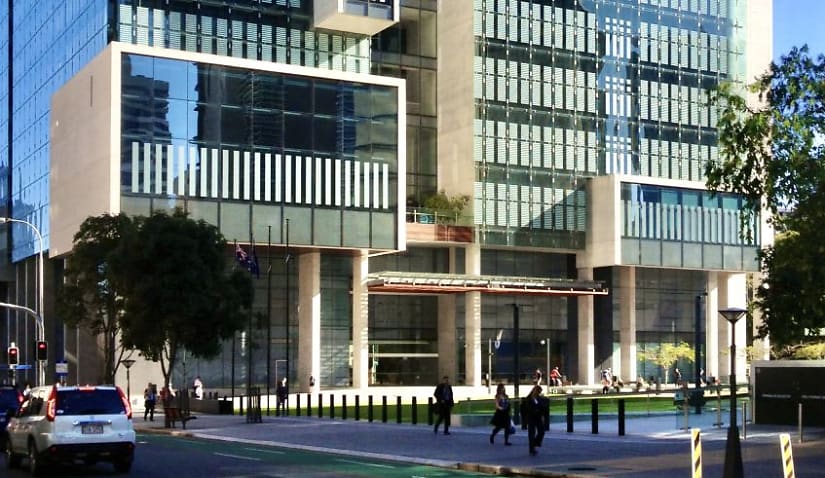

A Queensland solicitor has failed in her bid to overturn a default judgment requiring her to pay more than $70,000 in unpaid legal fees to the firm that once acted for her in a property dispute.
The Supreme Court of Queensland heard that Michelle Britton had retained Rose Litigation to act in proceedings involving a Sunshine Coast property in Parrearra that she and her husband jointly owned.
The Queensland-based firm acted for the couple in proceedings brought by the purchasers, identified in court documents as the Streys, who were seeking to enforce the contract for the sale of the property.
However, after Rose Litigation ceased acting for the couple in late 2024, the relationship between the parties deteriorated into a fee dispute, with the firm pursuing Britton for more than $62,000 in unpaid legal costs.
When no defence was filed within the required timeframe, despite Britton being personally served in December 2024 and granted multiple extensions, the firm ultimately secured a default judgment in May 2025.
In seeking to set aside the judgment, Britton relied on a combination of medical issues, personal circumstances, and concerns about the firm’s conduct, arguing these factors prevented her from properly defending the claim.
She told the Supreme Court she had experienced ongoing health complications following surgery for an acute glaucoma attack, including “chronic migraines, vertigo, vision impairment, and reduced immunity”.
Britton also told the court she was the sole carer for her three children during the period in which she was required to file a defence, including one child with special needs.
While Justice Cooper accepted that Britton had been dealing with significant personal and medical challenges, he was not persuaded that those circumstances “satisfactorily explain” her failure to file a defence within time.
Based on the evidence, Justice Cooper found she was aware of her obligation to file a defence, but was not persuaded that the circumstances relied upon explained the more than three-month delay.
Instead, he identified the “real cause” of the failure as Britton’s focus on separate litigation involving the purchasers of the property, rather than the proceedings before the court.
The Supreme Court also took issue with Britton's conduct after she applied to set aside the judgment.
Although Justice Cooper acknowledged the application was lodged promptly, less than two weeks after judgment was entered, he explained the matter was significantly “delay[ed] in progressing the application to a hearing” due to repeated failures to comply with court orders requiring the filing of supporting material.
Despite several adjournments being granted, deadlines were repeatedly missed, and the court ultimately found the delay was largely attributable to Britton’s own non-compliance with procedural directions.
The most significant hurdle, however, was whether she could demonstrate a viable defence to the legal fees claim.
Britton told the court there was no valid costs agreement with Rose Litigation after her husband ceased being represented by the firm, arguing that it had not entered “into any new costs agreement with her alone”.
In a draft defence prepared by Britton, she alleged the firm acted in a “position of conflict”, claiming it had “exceed the agreed scope of work, contain unauthorised charges, duplicate charges, incorrect charges, and breach the costs agreement provisions”.
However, Justice Cooper determined that none of the allegations raised an arguable defence, stating that they were “not necessarily fatal to the application”.
He rejected the contention, finding that even if the original arrangement had changed, the parties’ subsequent conduct established an ongoing retainer on the same terms.
"There was no requirement that Rose Litigation enter into a new costs agreement," Justice Cooper said.
Rather, the Supreme Court heard that Rose Litigation repeatedly provided “updated costs estimates” and that Britton “continued to provide instructions” to the firm, with the court ultimately concluding the allegation of unconscionable conduct had “no basis”.
After carefully reviewing each of Britton’s allegations, Justice Cooper concluded that none established a “prima facie defence on the merits” and that her failure to file a defence, alongside delays caused by non-compliance with court orders, meant it was not appropriate to set aside the default judgment.
The application was therefore dismissed, with costs to be determined, leaving Britton liable for $70,626.16, including interest and costs.

