

Powered by
MOMENTUM
MEDIA

Rolled up in his attempt to dodge a bankruptcy order, a solicitor disciplined for professional misconduct tried to have a Federal Court judge recused because he used to be the director of the same chambers as the barrister who made the initial complaint.
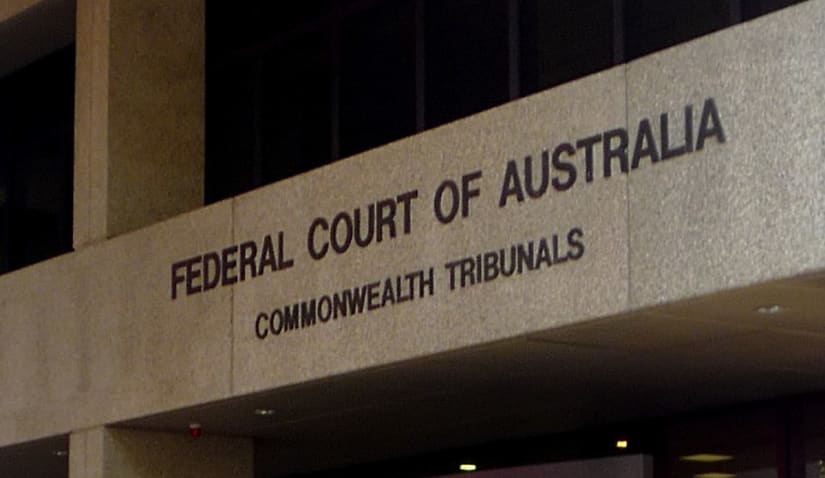

Following successful professional misconduct proceedings and a costs order in the sum of $197,053.03, the Legal Practice Board of Western Australia (LPBWA) secured an order by a registrar of the Federal Court to sequester the estate of Manraj Singh Khosa.
According to the LPBWA’s disciplinary register, Khosa was struck off the roll in May.
Attempts by Khosa to appeal the State Administrative Tribunal’s costs decision were knocked back by both the Court of Appeal of Western Australia and the High Court of Australia in late 2024.
The costs were entered as a judgment debt in November 2024, and a bankruptcy notice was served on Khosa in January 2026.
In the most recent decision, delivered by Federal Court Justice Darren Jackson on 4 August, Khosa attempted to oppose the petition.
In his grounds, Khosa alleged the LPBWA engaged in conduct amounting to an abuse of office and/or power in order to “exert undue influence over him” during the tribunal proceedings.
He also claimed the LPBWA misled the tribunal by allowing an ink dating report of his wife’s diary to stand. The diary allegedly disproved allegations that Khosa had made false or misleading statements during a meeting with the board in June 2015.
By the LPBWA’s failure to withdraw the ink dating report, the result was “of such fraud, collusion or miscarriage of justice as to warrant going behind the costs order”, Khosa alleged.
Justice Jackson tossed both grounds because neither articulated any connection between the allegations and the sequestration order.
Khosa also alleged the tribunal engaged in “racial profiling” by unreasonably requiring his family doctor, who is also of Indian descent, to attend at short notice to answer questions.
Justice Jackson said there were no rational grounds to assert that the similar ethnic background of Khosa and his doctor was any part of the reason why the doctor was required to give evidence.
“The claim is scandalous,” Justice Jackson said.
The LPBWA’s suggestions that Khosa also ought to have known about his wife’s notes and “ought to have been aware of everything” she did was also an element of racial profiling, he alleged.
This allegation was dismissed as “all but unintelligible”.
“Even if these allegations had not been scandalous and fanciful, as they are, once again there would be no intelligible connection between the alleged conduct of the LPBWA and the tribunal’s decision to make an adverse finding against him, or the discretion of the tribunal after that to make the costs order,” Justice Jackson said.
Having reviewed the file the day before the July hearing, Justice Jackson was alerted to the fact that Khosa’s matter stretched as far back as August 2017, when he had been an LPBWA member.
The LPBWA clarified that there were two committees that existed at the time, and Justice Jackson had served on a committee that did not raise or consider any matters relating to Khosa.
Nevertheless, Khosa claimed it could give rise to a conflict of interest, particularly if Justice Jackson’s LPBWA committee had been responsible for the conduct of its officers and employees.
Khosa also submitted Justice Jackson was director and chair of Francis Burt Chambers, where the barrister who made the initial disciplinary complaint had worked at the same time.
He alleged “given the outward appearance of existing conflicts of interest, the principle that justice must not only be done but seen to be done”, the hearing should be relisted before another judge.
Justice Jackson said Khosa was unable to articulate any “logical connection” between the matter and any apprehended deviation on his part “from deciding this proceeding on its legal and factual merits”.
“I had nothing to do with Khosa’s matter … [and] in his submissions he was unable to point to conduct of the committee or its staff and officers, during my time on it, that was going to be the subject of complaint in this proceeding,” Justice Jackson said.
On his former position at Francis Burt Chambers, Justice Jackson said he was aware of the identity of the complainant but that his professional association “could only be described as remote”.
The fact that they were both members of a large barristers’ chambers for a time, and that Justice Jackson served on the board, could not give rise to any reasonable apprehension of bias, the court found.
Citation: Legal Practice Board v Khosa [2026] FCA 1059.

