

Powered by
MOMENTUM
MEDIA

A former judge of the Supreme Court of the Northern Territory failed to have the Federal Court toss out a complaint by an associate who has made allegations of sexual harassment and discrimination.
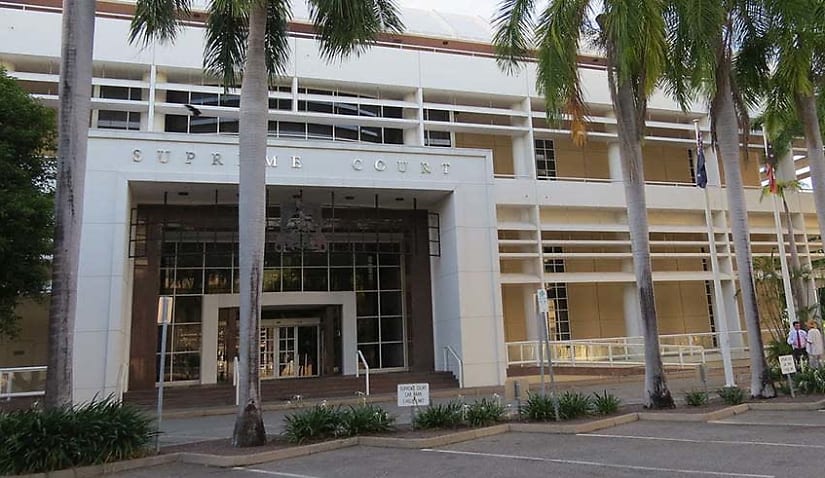

Justice Mark Moshinsky of the Federal Court of Australia refused to overturn a decision of the Northern Territory Anti-Discrimination Commissioner to accept a decade-old sexual harassment and discrimination complaint against a Supreme Court judge.
Under the territory’s Anti-Discrimination Act, there is a 12-month deadline from the alleged prohibited conduct to make a complaint, but it can be accepted regardless of whether the commissioner is satisfied that there are explanations for the entire time period of the delay.
A delegate of the commissioner was told of the complainant’s mental health concerns and their desire to preserve a career in law.
The delegate also noted the complainant reported the alleged sexual harassment to the Supreme Court of the Northern Territory and requested an investigation the day after the High Court released a public apology for the misconduct of former judge, Dyson Heydon.
Prior to this apology, “there had never been a public complaint of sexual harassment by a court employee against an Australian judge” and it was reasonable for the complainant to believe “there was no realistic way to hold a judge accountable for sexual harassment”.
The delegate was also satisfied that internal investigations and without prejudice negotiations between June 2020 and May 2024 were legitimate reasons for the complainant’s delay.
They were also satisfied that prejudice to the five respondents of the complaint, including the judge, would preclude a fair hearing.
In proceedings heard before Justice Moshinsky, the judge alleged the delegate erred “by not taking a sufficiently stringent approach in deciding whether to accept the complaint out of time”.
Where there has been a significant delay, the judge argued the limitation period should be “rigidly applied”, citing reference to applications for certiorari and mandamus in Marks.
To apply that approach would be to “impose a gloss on the statutory language”, Justice Moshinsky said in dismissing this argument.
“Insofar as [the judge] that the longer the delay, the more persuasive the explanation needs to be, that may be accepted,” he said.
“In my view, the delegate understood that and approached the task in that way. The delegate’s reasons contain consideration of the length of the delay and whether the explanations for the delay were satisfactory.”
The judge made several other unsuccessful arguments against granting the extension, including that the delegate erred by having regard to the public interest and seriousness of the allegations, and erred in the treatment of societal and cultural context.
Further, the judge claimed the delegate’s conclusion that there was a satisfactory explanation for the entire period “was legally unreasonable, irrational or illogical”.
Justice Moshinsky dismissed this, having found the delegate’s reasons were “logical and rational”, and these submissions “appear to be no more than a disagreement with that reasoning, rather than establishing unreasonableness, irrationality or illogicality”.
The judge’s proceedings were dismissed, and he was ordered to pay the complainant’s costs.
Citation: RST v Anti-Discrimination Commissioner (NT) [2026] FCA 990.

