

Powered by
MOMENTUM
MEDIA

More litigants are going it alone in complex legal proceedings, and the Federal Court is keen to understand why. In conversation with Lawyers Weekly, one researcher has unpacked some of the potential reasons for ditching lawyers and what he hopes a decade of data will reveal.

In the space of a year, the number of claims filed by an unrepresented party and allocated to a judge’s docket increased by 64 per cent, the majority of which were dealt with in the original jurisdiction. On top of that, many judges reported their matters take up “much more time”.
The number of matters not accepted for filing – overwhelmingly due to being an abuse of process, or being frivolous or vexatious – tells an even starker story: the 80 matters not accepted for filing in 2023 increased to 143 in 2024 and 244 in 2025. There then seems to be a corresponding increase in the applications for review of decisions.
This data, shared in a speech by Chief Justice Debra Mortimer at the Commonwealth Law Conference, barely scratches the surface of the digital court record it has kept since 2014. There has been some difficulty in capturing and analysing it accurately, the Chief Justice said.
A research partnership between the court and the University of NSW (UNSW) has paved the way for researchers to access the decade of data to understand why litigants appear unrepresented, how they are navigating the legal system, and what can be done better.
For Professor Kristy Martire from the UNSW School of Psychology, the project will “allow us to speak to people who are self-represented and to learn more about who they are and what their experiences are”.
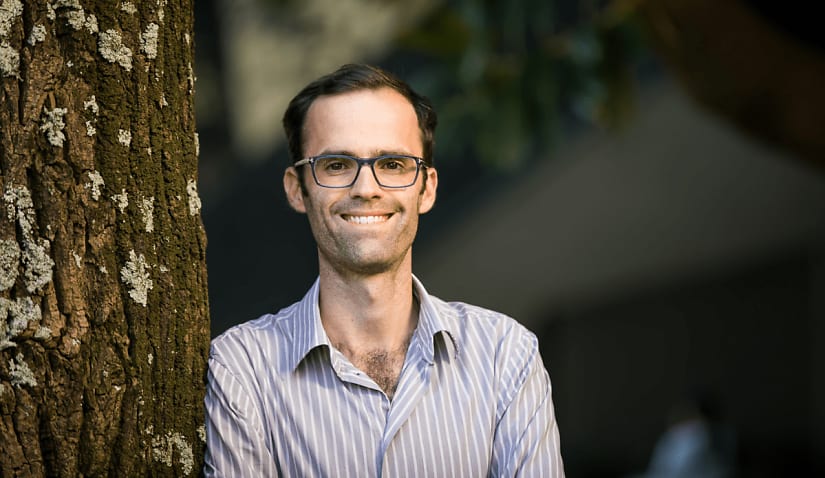
UNSW faculty of law and justice’s Associate Professor Dr Harry Hobbs told Lawyers Weekly the research partnership would allow the Federal Court to develop responses calibrated to particular litigants.
“This will allow us to evaluate initiatives the Federal Court might introduce to deal with unrepresented litigants and basically get a sense of who these people are and why they are unrepresented,” Hobbs said.
“Are they unrepresented because they couldn’t find a lawyer or couldn’t afford a lawyer? Are they unrepresented because they had legal advice but didn’t like the advice that was given to them, and they want to run their arguments anyway? Are they unrepresented because they are making a kind of pseudo-legal, sovereign citizen-style argument and no lawyer was willing to make that argument for them?”
Hobbs said the success of those initiatives may not come down to the outcome of matters but rather whether the litigant feels heard, whether they understand the process better, and if they feel they got a fair hearing.
Hobbs has extensively researched those who engage in pseudo-law or sovereign citizen-style arguments, which tends to become the dominant focus when unrepresented litigants are discussed, “because of the significant burden they impose on court staff and judges and registry”.
This small subsection can have an impact on the broader group, and Hobbs said there could be a “real risk” that processes are designed without accounting for the larger spectrum of people who come to court without a lawyer due to other concerns, including financial restraints.
“What I’m most interested in learning about is the broader spectrum of why people appear without a lawyer and what motivates them. What is their understanding of their claims and their reasons for not having a lawyer and then, based on that research, how we can develop responses that support them in that journey but also take some of the burden off the court system,” Hobbs told Lawyers Weekly.
Hobbs said he is also interested in addressing the negative perceptions unrepresented litigants have at the end of their matters.
“They go to court, they have some hope or trust in the system, they lose, and they can’t decipher why they lost because it seems so mysterious and seems so difficult to understand. They leave thinking the court system is not working for them and it’s corrupted or they have some sort of conspiratorial ideation around the legal system.
“I’m most motivated to try to minimise that risk,” Hobbs said.
The study will be split into multiple parts. First, Hobbs and Martire will conduct a literature review of the materials around unrepresented litigants and the responses by courts to manage them.
The next will focus on an empirical analysis of the newly accessible data.
“The partnership is really exciting. I think courts and academic researchers do different things, but we’re all geared towards the same goal, which is supporting the administration of justice, supporting people in society to feel the courts are accessible and comprehensible, [and ensuring] people can understand what’s going on.
“I think this shows the Federal Court has a willingness to reach out to the academic expertise and rely on people who are experts in things like psychology or data in order to really support the court. It’s quite exciting to see how [this partnership] may develop,” Hobbs said.

