

Powered by
MOMENTUM
MEDIA

A recent International Women’s Day event, hosted by a national law firm, highlighted the importance of lifting up the next generation through authentic, courageous support from those at the top.
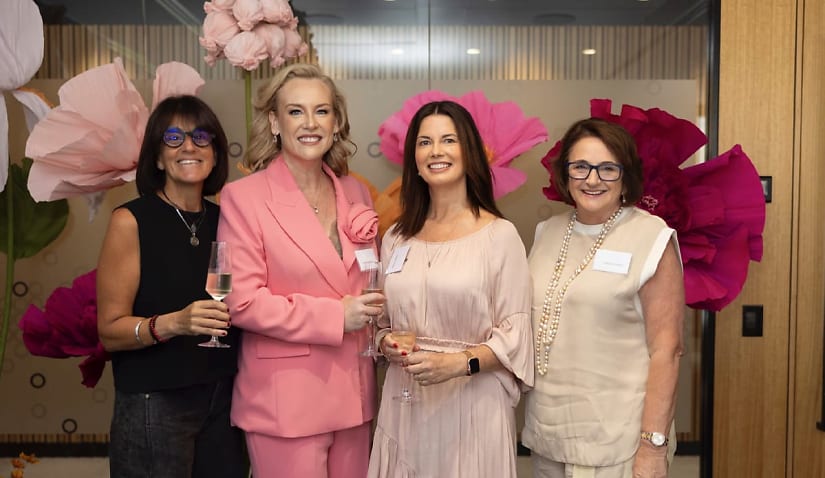

At a recent luncheon at BigLaw firm Mills Oakley, hosted ahead of International Women’s Day (IWD) 2026, family law partner Martina Storgato reflected that the first IWD gathering took place in 1911 and that “every woman who rises stands on the shoulders of others – mentors, colleagues, friends, family – women and men who believed in her before she believed in herself”.
“And we, in turn, have a responsibility to reach back and lift the next generation with intention, with courage and conviction,” she said.
The idea of recognising “the power we each hold to open doors, widen paths and ignite possibility for those who will follow us” was a running theme throughout the event’s three speakers.
The first, Jacqueline Bugg, vice president and associate general counsel at Oracle Corporation Australia, said: “It’s often said [that] ‘A woman alone has power. Collectively, we have impact.’”
She recounted a pivotal moment in her early career in which a senior public servant and past coworker recommended Bugg for a position, noting: “that kind of faith – in a young lawyer moving to a big city – was invaluable. She didn’t just open a door. She handed me confidence.”
It was a moment that shaped Bugg’s outlook forever because, as she highlighted, “what she did was courageous”.
“Trust builds trust. And someone has to go first,” she said.
And today, Bugg’s leadership style means encouraging her team to test themselves, “to take on bigger matters, new areas, unfamiliar challenges”.
She also identified the importance of not leading alone. She referenced a Harvard Business Review study that found women benefit strongly from strong professional networks, and indeed, women are more likely to reach executive leadership positions when they have an inner network of female contacts.
This, Bugg noted, was due to the cultural and systemic hurdles women face in their professional lives – but is mitigated by having trusted women to help navigate and manage these challenges.
Bugg also touched on competition and comparison – noting that, despite what society might push, “another woman’s success does not diminish yours”.
She said: “When you build others up, you build influence.”
Regarding the future advancement of more women in leadership, Bugg suggested taking steps to identify potential early, focusing not just on mentorship but sponsorship, encouraging the formation of women-led professional networks and engaging allies in the workplace.
Bugg said: “When she shines, you shine. That is female leadership.”
In a similar vein, the lead of Trans-Tasman Business Circle and Women Leaders by the Circle, Tanya Oziel, expressed the value in “developing leaders, supporting women at different stages of their journeys, and helping build communities where people feel seen not just for what they do, but for who they are”.
She said: “I’ve seen firsthand how powerful it is when people feel supported, encouraged and connected.”
Building the next generation, she said, is about “learning from the elders who’ve walked the path before us, and becoming the people the next generation needs now”.
“It’s continuity. It’s responsibility. And it’s also a privilege,” she said.
For Oziel, every step forward she has taken was “shaped by someone who had already walked the road”.
She said: “Sometimes, it was someone senior who gave guidance. Sometimes, it was someone who simply saw something in me before I fully saw it myself. Sometimes, it was someone who told me a hard truth that I needed to hear. And sometimes, it was someone who simply said, ‘You’ll be OK. This part passes.’”
These lessons, she said, shape the way you lead.
“When leadership becomes too polished, too performative, or too guarded, something essential gets lost. But when it’s real, people feel it. And that’s the kind of leadership that shapes lives,” Oziel said
For Oziel, the most impactful leaders weren’t the most senior; they were the most honest.
“The ones who spoke truth even when it was uncomfortable. The ones who were willing to be vulnerable. The ones who shared not just their successes, but their doubts, their mistakes, and their lessons. That’s what real mentorship looks like,” she said.
And from seeing women at every professional level feeling some form of impostor syndrome, Oziel reflected that the more we try to fit into a box, “the more disconnected we become from our real strength. Because leadership doesn’t come from fitting in. It comes from standing full in who you are.”
Oziel said: “Listen to those who walked before you, stand strong in who you are, and support those coming next.”
“Be the energy you want to attract.”
For the co-founder of The Charitable Foundation, Deborah Killelea AM, leadership has been characterised by taking action where she saw it was needed. According to Storgato, “her leadership is grounded not in recognition, but in impact – real, measurable, life-changing impact for children who need it most”.
Killelea herself expressed an adaptive form of leadership that reflected her background and experiences.
Growing up in various parts of Europe, sometimes within the backdrop of societal disarray, and often operating in poverty-stricken and war-torn parts of Africa, Killelea learnt the importance of “negotiation and compromise in leadership”.
She reflected how leadership can look very different “when I am in a remote African village”.
“African culture is quite dogmatic and very direct. If I used the skills I use in Africa in Australia, I could be accused of bullying with all the HR issues that come with that,” she said.
However, she needed a different style of leadership than ones she had learnt abroad when it came to the establishment of Be Centre, a mental health charity focusing on play therapy.
Highlighting the difficulties of balancing empathy with consultation and feedback, which the professionals believed created “conflict with the therapeutic process with their clients”, Killelea stated: “I always try to lead with empathy.”
“Empathy is very different to compassion. With empathy, you can make hard decisions that can hurt people; however, if it’s the right business decision for leadership and better outcomes, it’s necessary.”
She continued: “For my leadership, I need first to listen, understand the other person and evaluate a request, project or situation.”
“The most important aspect is to be myself. To be authentic. My skills are almost organic with responses to situations. I also need to accept my limitations. In some situations, it is important for me not to lead and pass it on to someone better skilled than [I am].”
Humility defined both Killelea’s speech and her work.
As evident from the inspiring stories celebrating International Women’s Day, positive change is possible with the right attitude and the right people around you.
