

Powered by
MOMENTUM
MEDIA

A recent panel for law students discussed leadership in the profession and what it looks like to find your path.
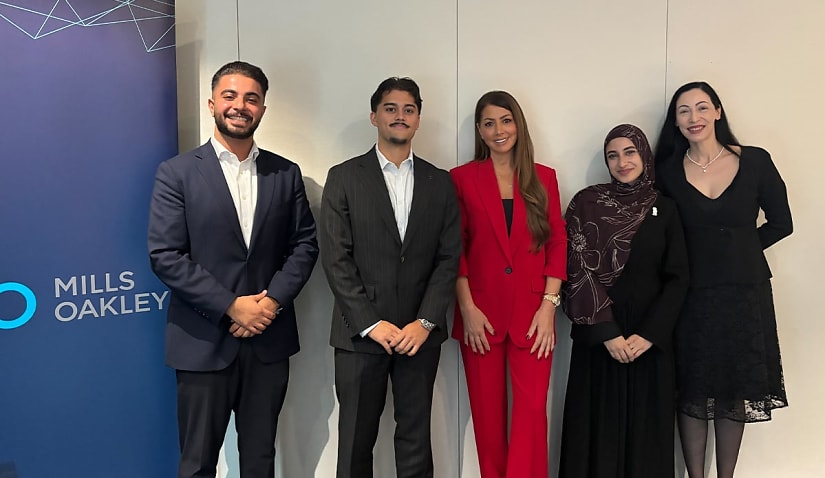

During a recent panel event, hosted by BigLaw firm Mills Oakley for law students of Western Sydney University, firm partner Hoda Nahlous explained that a legal path is easier to follow when “you have immediate references in front of you.”
“But law is a framework of reference, and it’s made up of multiple stakeholders that you meet, experiences that you accumulate along the way,” Nahlous said.
According to Nahlous, law and leadership go hand in hand, and it is through effective communication that one can secure the desired outcome as a lawyer and leader. Being a fiduciary, she highlighted, “is an immense responsibility that we wear to the people [who] we serve”.
The conversation turned to the three key leadership qualities: communication, trust – underpinned by competence and connection – and resilience.
Ban Weston, executive coach and managing director at wm Consulting, also noted the importance of emotional intelligence, “because it’s all about our connections with our clients, our stakeholders, with the people that we work with”.
“And that’s what actually makes us charismatic, what makes us credible. And that’s the thing that’s going to get us the results that we’re looking for,” Weston said.
She added: “So very early on, what we’re actually teaching is more about your professional brand. You’ve got to know who you are in the workplace.” For Weston, authenticity is important, but coming to work professionally, and at your best, is crucial to building your credibility and your reputation.
When asked about being intentional when building his professional brand, early-career legal professional Sina Aghamofid explained that, when you enter the workforce, “you don’t realise that it’s being developed regardless of whether or not you’re thinking about it”.
“And it was early on that I realised that I can take control of that by doing certain things in the workforce to build the brand that I want to project out there. And that brand was one of competence, being able to be confident and speak well, to listen,” Aghamofid said.
“And it’s through little small steps, such as going out of your way to talk to someone and picking up some skills from them, picking up an experience from them and being able to prove yourself to them. Because a lot of the time, in a graduate role, you’re not necessarily given the things that you want to work on, but it’s up to you to realise that you can do this. You can go and ask for what you’re actually interested in.”
Weston agreed with this sentiment, adding: “You’ve got to go and ask. You’ve got to have a voice to develop that.”
Aghamofid continued: “Confidence comes from repeated exposure.”
“When I entered the workforce, I felt out of place. The people around me were different from my background and experience, and I had to be OK with that and figure out, well, how do I fit in this space? And that gave me the confidence to be myself at work and to talk to people in an authentic way.”
Summer clerk at HWLE Lawyers, Aloizio Ferreira Compart, agreed that “if you don’t be proactive and chase after something, no one’s going to look for you. You are the leader of your own career.”
“There’s no shame in trying. I think, oftentimes, coming to a place you’re so eager to settle and, OK, I’ll just do what they tell me.”
He explained that having resilience to believe in oneself, “you can express yourself in many ways. And for me, that’s what it was, you know, chasing after something.”
For psychology honours student and one of the three panellists, Fatima Harb, “it’s about setting your intentions from the beginning, saying, this is what I want to do in the years to come or even the months to come. You’re goal-oriented, and you work towards that.”
She added: “We’re always in a state of growth.”
“You really want to take account of yourself. You want to self-reflect and see, OK, these are what my intentions are. This is how I want to work on it. And like my fellow panellists said, you want to work on that by being intentional, by learning how to be confident.”
“You only learn it through experience.”
The panellists were in agreement that you have to be strategic about your persistence and how you approach people. This may mean checking the calendars of the people you want to approach, taking time to build a relationship rather than only seeking something for yourself, and being authentic in the way you express yourself to them.
Ferreira Compart urged to ask specific questions, such as “what do you think I should be doing?” and “what are some tips you have for me to succeed in this class?”
“And from there, you build a connection. Endless opportunities can come up and rise.”
Correspondingly, he urged students to take advantage of leadership opportunities at university, building a network through societies and conferences, and simply doing extracurriculars with people.
Addressing the significant change that university can feel like after high school, Ferreira Compart commented: “I think if I were to give myself advice when I was first going to university, [it would be] to speak with people.”
Aghamofid, finding that “there’s no trodden path for you to follow”, saw volunteering as a way to get exposure to leadership positions, including the UN Youth NSW, one of the largest community youth-led organisations in Australia.
He said: “When I transition now, sitting on an actual board with actual people who have made it or where I want to be one day, it’s all that experience that I’ve had being on a local youth community board, just different stakes involved.”
“So if you’re at university or anywhere in life, I highly recommend just reaching out to a youth group, a club, whatever it is, and just get involved because that’s how you get your first leadership or management experience you’re seeking. And then you can use that to get the actual professional experience.”
Harb continued the discussion by pointing out that “your communication style isn’t always the same when you’re talking to different people. You need to understand the psychology behind it, which is so important for law students, because you’re not going to meet the same people all the time or how they interact all the time.”
“You need to understand different personality types and how you can adjust your speech and your way of communication, whether it’s verbally, online, or your body language.”
She added: “Communication does reach beyond the words.”
This also entailed being flexible when it came to clients. Adapting to different communication styles and finding a connection beyond the issues were two of the ways the panellists agreed can help advance your standing within the profession.
Here, Weston raised the point of resilience and how it can be actioned. For her, it is a critical skill that allows one to “respond constructively to challenges, maintain ownership and continue moving forward despite”.
“Resilience is not about avoiding adversity and sugarcoating it, but it’s also about how we interpret that adversity,” Weston said.
It is, she believes, “a critical leadership capability that enables sustained performance, learning and long-term success”.
Of the lessons from the Western Sydney University panel, the clearest is one of exhibiting the qualities of a leader, even as you take your first steps in the legal profession.
