

Powered by
MOMENTUM
MEDIA

Speaking exclusively to Lawyers Weekly, two chief justices reflect on the state of access to justice, question how it became a “niche” area of law, and explain why it has contributed to diminishing public trust.
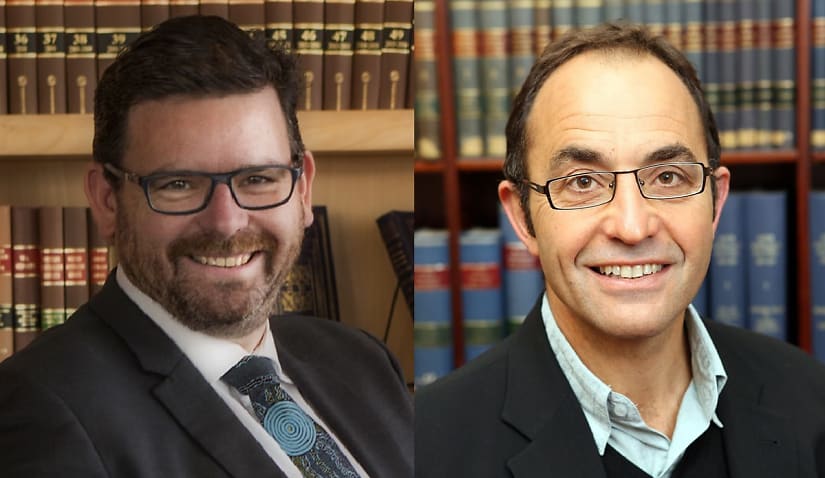

In a plenary address delivered at the Australian Legal Convention, held at the High Court of Australia last month, Western Australia’s Chief Justice Peter Quinlan posed a profound question: when was it that access to justice became a niche area of law?
According to the World Justice Project’s scale “people can access and afford civil justice”, Australia has a global rank of 70 out of 142. When compared to sub-factors like “free of corruption” and “effectively enforced”, the expense of justice is the country’s biggest concern.
“When exactly did it happen that access to justice became a near-exclusive province of legal aid services, community legal services, Aboriginal legal centres, and pro bono partners in large law firms whose key performance indicators are expressed in the same metric as what we might call their pecuniary partners: hours, budget and money.
“When did access to justice cease to be a core value of the entire legal profession and legal system upon which the legitimacy of the judiciary depends?” the Chief Justice said to an audience of judges and leading legal professionals, including other chief justices across the country.
In June this year, research from the Victoria Law Foundation found that about 40 per cent of Australians are ineligible for legal aid but are unable to afford private services. With one in four Australians needing legal services a year, this leaves thousands priced out.
Chief Justice Quinlan said those who fall into that gap, or the missing middle, are “ordinary citizens in potentially ruinous commercial disputes with financial institutions and other large commercial actors”.
“Unqualified for legal aid, sometimes because of the very asset they seek to protect, and unable to be assisted by pro bono programs operated by the firms that act for the litigants on the other side, these litigants fall between the cracks and find themselves with only what limited procedural assistance the court can give,” he said.
Speaking to Lawyers Weekly after the address, Chief Justice Quinlan said the legal and judicial systems need to be “more creative” about providing access that is not just dependent on funding decisions.
By having options available, confidence and trust in the system will follow. Without it, Chief Justice Quinlan said, the corrosion of trust can breathe life into the rising sovereign citizen movement.
“We want to make sure people are not drawn into that way of thinking because the system can’t provide the ready access they need. We’re all responsible for that,” Chief Justice Quinlan said.
“Some of the things are out of our hands and out of our control, but at every point in the process, and at every part of the sector, we need to try and be creative about what our particular role can be.”
In the same plenary session, South Australia’s Chief Justice Chris Kourakis – who recently announced he was stepping down – said civil legal aid has been “closed completely or severely restricted”.
“The costs of civil litigation, plus simple and complex litigation, have increased exponentially. Contingency fees and class actions are not a satisfactory alternative in many cases,” Chief Justice Kourakis said.
Chief Justice Kourakis said that if working Australians are unable to access the justice system, fewer of them will be concerned about judicial independence, fewer will place value on the institutions, and they will “care less about the effects of our legal system” on their fellow Australians “who are even more vulnerable”.
In conversation with Lawyers Weekly, Chief Justice Kourakis said the cost-of-living crisis has already made it difficult for the missing people to keep household budgets together and educate children. It means they are less likely to “risk a single dollar” trying to get justice.
“Secondly, I strongly believe there is a connection between practical exclusion from courts and the justice system, and problems that we’re experiencing in terms of judicial legitimacy, questioning the role of courts and, even at its most extreme end, sovereign citizens,” Chief Justice Kourakis said.
Reflecting on what can be done about it, Chief Justice Kourakis said professionals across Australia’s legal profession should be “asking searching questions about our ethical responsibilities”.
“We are a profession, and we have got to balance that responsibility with a need to make a living, but I think we can move the balance a little bit towards more professional responsibility, in terms of doing more pro bono work,” Chief Justice Kourakis said.
More importantly, Chief Justice Kourakis said lawyers need to think about “better ways to do our work”. No longer is it good enough to give advice “in the way it has always traditionally been given”.
“There are much more efficient, cost-effective ways to do it. We’ve got to think about alternative dispute resolution mechanisms, and we have to use the technologies,” Chief Justice Kourakis said.
“AI is the first tool I have seen in my entire career that has the capacity to move the dial. We’ve got to utilise it, harness it with eyes wide open and with a strong view of ethics in everything we do, but we have a responsibility to try and use it to increase accessibility, not our personal profits.”
More from the 2025 Australian Legal Convention:

