

Powered by
MOMENTUM
MEDIA

A post-hospital return to the bench saw a judge conduct a hearing from his bed, but the unusual arrangement was not out of line.
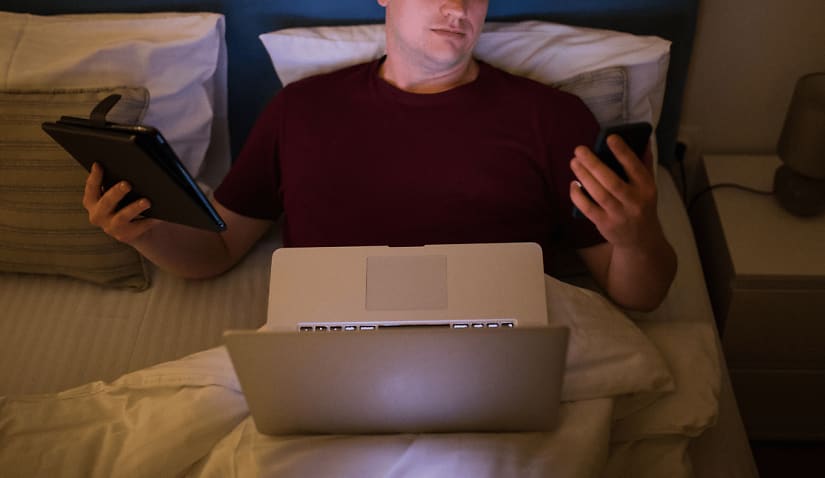

Deputy Judge Richard Clayton KC of the United Kingdom High Court was commended for his willingness to conduct a disciplinary hearing, even if it meant he had to do so entirely from his bed.
However, the Court of Appeal’s Lord Justice Stephen Phillips, with agreement from Lady Justice Sarah Falk, said sitting judges should ensure they “have the essential tools to undertake the task properly and professionally”, unless there are exceptional circumstances.
“I do not say that a judge should never undertake a hearing whilst in bed or otherwise than at a desk or table, but it should be a last resort, even where the matter cannot sensibly be listed before a judge sitting in the conventional way,” Lord Justice Phillips said.
Deputy Judge Clayton had just finished an eight-day hospital stay for a ruptured Achilles tendon when he opted to appear in a “reclining” position to hear an appeal of a disciplinary matter brought by General Optical Council against optometrist Suleman Patel.
He said he had cleared it with “senior staff” at the court.
There were some hiccups at the start of the hearing, including Deputy Judge Clayton informing the courtroom that “sitting prone in bed” had made it difficult to navigate the PDF bundles”. He later added he could not take notes as he was “holding my computer”.
However, the transcript recorded Deputy Judge Clayton informing the parties he was taking “proper note” of what was being said and had taken a break when the case – which had gone longer than the expected two hours – had begun to test his stamina “significantly”.
At the end, Deputy Judge Clayton apologised for the problems at the beginning and explained: “It had been quite tricky but not impossible to deal with the hearing largely from a non-sitting position.”
Patel appealed Deputy Judge Clayton’s decision on the ground that his appeal had allegedly not been dealt with “to the standard to be expected of the court such that judgment is not reliable”.
Lord Justice Phillips declined to award Patel’s appeal, finding there was no injustice in how Deputy Judge Clayton conducted the hearing.
However, Lord Justice Phillips said Deputy Judge Clayton should not have sat on the case “whilst encumbered by his injury”.
“There was no great urgency and other arrangements could and should have been made,” Lord Justice Phillips said.
There was some criticism of Deputy Judge Clayton’s decision to deliver an oral “draft” judgment and the 16-month delay in providing the parties with a formal, final judgment.
The United Kingdom justice system was also critical of counsel Michael Engelhardt-Sprack, who appeared in a final hearing 20 minutes late, wearing headphones and travelling on a train.
The background sounds of other travelling passengers made it difficult to conduct the hearing, and the matter was paused to give Engelhardt-Sprack some time to find somewhere quieter. Instead, he appeared again from a second train.
Having deemed this “totally inappropriate”, the judge adjourned the hearing until the following day and Engelhardt-Sprack was ordered to cover the wasted costs, counsel fees, solicitor costs, travel, hotel expenses and the attendance of a trainee solicitor.

