
Powered by
MOMENTUM
MEDIA

The NSW Parliament is conducting public hearings this week as part of its inquiry into the Human Rights Bill 2025, which could bring the nation’s most populous state one step closer to establishing such legislation.

The inquiry comes following the formation of an alliance for the Human Rights Act for NSW, whereby faith bodies and trade unions spent years calling on NSW to conduct a community consultation and implement an act that protects human rights.
In a statement, the Australian Lawyers for Human Rights (ALHR) noted that NSW had slipped significantly behind comparable jurisdictions when it comes to legally protecting fundamental rights.
The ACT (2004), Victoria (2006), and Queensland (2019) have enacted human rights acts, along with comparable democracies such as Canada, New Zealand, and the UK, all of which have developed local human rights acts.
Experts have warned that the absence of a Human Rights Act in NSW leaves residents with some of the weakest legal protection of their human rights anywhere in the Western democratic world.
The Human Rights Bill 2025 was introduced by the member for Newtown, Jenny Leong, in October 2025 and referred to the Legislative Assembly Committee on Community Services in March.
The committee has published 268 submissions and will now hear from a range of stakeholders over three days of public hearings this week.
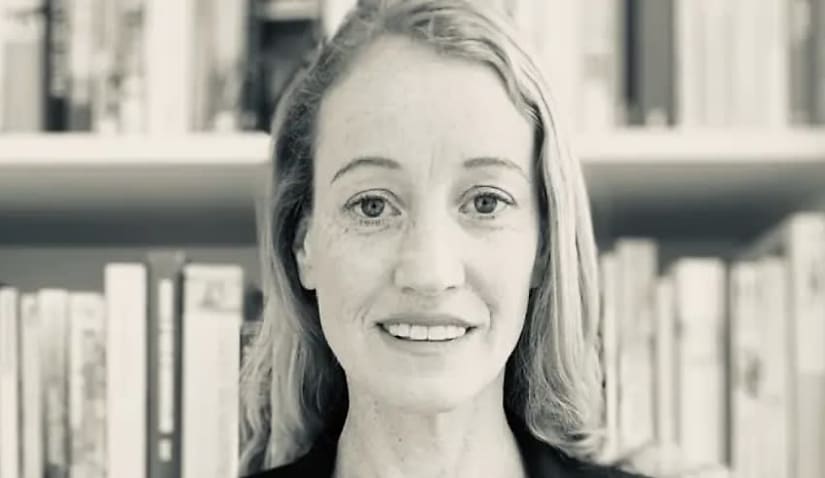
Talking to Lawyers Weekly, Kerry Weste, chair of the Human Rights Act Alliance and vice president at Australian Lawyers for Human Rights, recognised that NSW’s current patchwork of laws leaves significant gaps in the protection of fundamental rights.
“NSW’s patchwork of laws only protects some rights, for some people, in some situations,” Weste said.
“A Human Rights Act would require all government agencies, from police and prisons to schools and hospitals, to respect human rights when making decisions.
“It would also give people an accessible way to take action when their rights are breached.”
Weste also highlighted that gaps are evident across several key areas, where existing legislation either fails to recognise certain rights or lacks enforceability.
“Current legislative gaps [consist of]: The right to education: while the Education Act 1990 (NSW) recognises the guiding principle that ‘every child has the right to receive an education’ (s 4(a)), it explicitly provides that the principle is not enforceable (s 127),” Weste said.
Furthermore, Weste stated that there is no right to adequate housing, healthcare and freedom of thought.
“Tenancy laws set out how an eviction happens, but nothing requires decision-makers to consider people’s right to adequate housing or whether a decision will leave a family homeless,” Weste said.
“There is no legal right to health services [and] NSW law contains no general right to freedom of thought, conscience and religion, for people of faith or of no faith.”
Weste also highlighted gaps in the protection of fundamental civil and political freedoms, especially the right to peaceful protest and the right to humane treatment for people deprived of their liberty.
“Fundamental democratic freedoms such as peaceful protest are protected only indirectly, through the implied constitutional freedom of political communication,” Weste said.
“There are criminal offences for serious abuse, but no right for people deprived of their liberty to humane treatment and freedom from torture and cruel, inhuman or degrading treatment.”
Public support for reform is proving quite strong, with recent polling by Amnesty International Australia finding that 76 per cent of people in NSW support introducing such an act in the state.
Public hearings regarding the act began on Monday (2 November), followed by hearings on Tuesday and Thursday in the Macquarie Room at Parliament House, Sydney.
