
Powered by
MOMENTUM
MEDIA

The Federal Court has dismissed a former academic’s defamation claim against Lawyers Weekly and HR Leader, finding the articles caused no serious harm and fairly summarised a public decision.
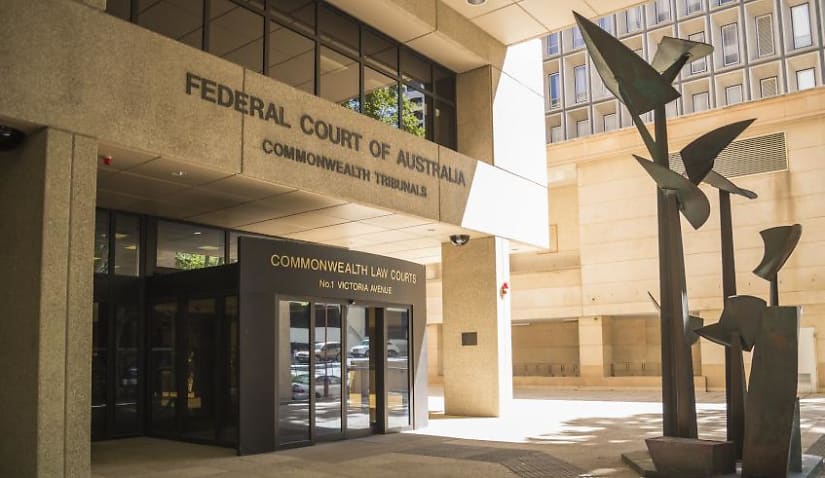

Justice Stewart Anderson has dismissed defamation proceedings brought by Dr Benjamen Gussen against Momentum Media and journalist Naomi Neilson for articles published in Lawyers Weekly and HR Leader.
Gussen alleged both articles – which were substantially similar, other than headline and standfirst – made out 12 imputations, including that he “acted opportunistically by commencing [Fair Work Commission] proceedings soon after signing a deed of release” and that whistleblowing claims “were insincere and self-serving”.
The respondents accepted that one imputation was conveyed: that Gussen’s case “lacked any arguable merit on appeal”. They also accepted a permissible variant of another imputation, being that Gussen brought and lost a general protections claim.
However, Justice Anderson found that this differed in substance from the pleaded allegation that Gussen brought and lost an unfair dismissal claim. Neither of those imputations was found to have been defamatory.
“Both articles are substantially accurate summaries of the FWC appeal decision which are written in a fair and anodyne way.
“There is nothing in the text of the articles which substantially misrepresents a material fact which is prejudicial to Dr Gussen’s reputation,” Justice Anderson said in his written reasons.
Gussen claims articles impacted career
In connection with a disciplinary process, Gussen entered into a deed of release with his former employer, Swinburne University. It provided that he resign from his employment and release the university from, among other things, claims arising out of the circumstances in the deed and the disciplinary process.
Gussen made a general protections application in the FWC the following month, which was dismissed on the basis he voluntarily decided to resign. The following February, the full bench refused Gussen permission to appeal, having found no arguable case.
The articles were published on 13 February 2025.
Following correspondence with Gussen, the articles were amended to correct the spelling of his name and to make the correct attributions to his job title and scholarly focus.
At trial, Gussen subpoenaed the national manager in employment relations at Australian Catholic University (ACU), who advised she was involved in his termination but not in his recruitment. She said the termination decision was made by the vice chancellor.
Questioned on what she knew about his employment history prior to termination, the manager identified “four different proceedings” commenced by Gussen in the FWC, including the two which led to the FWC decision and the FWC full bench appeal decision.
The manager said she read these decisions before a “cursory look” of the Lawyers Weekly article on 26 February 2025, which had been provided by a colleague.
The court was told Gussen was terminated because he breached a warranty to disclose “any material information that would cause any concern for ACU to enter into an employment arrangement”.
Given the FWC decisions were in the public domain, “the fact that Dr Gussen had been the subject of a serious misconduct process under the enterprise agreement of another university and there had been a threat to terminate his employment was a material fact which should have been disclosed to ACU during the recruitment process”.
Key findings on imputations
Without meaning any disrespect to Gussen, Justice Anderson found his Further Amended Statement of Claim and opening submissions to be “difficult to understand and comprehend”.
He approached the imputations “doing the best I can”.
Gussen first alleged the articles conveyed that he falsely claimed misconduct allegations and dismissal were set aside, when he resigned to avoid them.
While Gussen accepted the articles contained “accurate quotations and identify that his claim in the FWC was a general protections claim”, he said these were not “automatic antidotes”.
Justice Anderson did not accept this first imputation, noting there was no reference in the articles to Gussen making a “false claim, or indeed any claim at all, that ‘misconduct allegations and dismissal were set aside’”. Further, the articles were not found to have conveyed that he resigned to avoid misconduct allegations and dismissal.
Gussen then alleged the articles conveyed he acted opportunistically by commencing FWC proceedings soon after signing a deed of release, which he claimed was done by the wording of the opening words and his employment claim.
Justice Anderson dismissed this.
“The articles, fairly read, convey that the ‘critical action’ that led to the cessation of Dr Gussen’s employment was the execution of the deed and that Dr Gussen was not forced to resign.
“This does not speak to Dr Gussen’s motives in commencing the proceedings,” Justice Anderson said.
Justice Anderson was also not satisfied the articles suggested Gussen’s fraud allegations were baseless or discredited, that his whistleblowing claims were insincere or self-serving, or that he had misled the public by invoking his public interest.
He then rejected the contention the articles conveyed he had brought and lost an unfair dismissal claim, rather than a general protections application. The articles were found to have expressly identified the proceedings as a general protections claim, and the ordinary reasonable reader would not interpret the headlines to be otherwise.
Gussen made the claim that the articles conveyed he pursued frivolous or vexatious proceedings, particularly in the context of him being a legally trained academic bringing FWC proceedings after a deed.
While Justice Anderson said certain passages of the articles could lead “to the impression that the claims were hopeless”, he did not accept it as the preferable meaning conveyed to a reasonable reader.
“For a proceeding to be found to be vexatious or frivolous is a high bar and I do not think the articles go so far as to convey that – while they do convey that the deed was found to be a complete answer to Dr Gussen’s claims, they do not convey that those claims were so obviously without any merit so as to be considered trifling, a waste of time, or baseless,” Justice Anderson said.
Contrary to Gussen’s submissions, Justice Anderson also found the headlines and standfirsts of the articles “accurately captured the effect of Dr Gussen’s position recorded in the FWC appeal decision, which is that he had no real or effective choice but to resign from Swinburne and he brought a general protections application”.
However, Justice Anderson did accept the articles did not state that permission to appeal is not a preliminary hearing, or that it had been determined on the papers. Nevertheless, those omissions did not mean the articles were not “substantially accurate summaries”.
The parties agreed the HR Leader article had over 800 views, and the Lawyers Weekly article had just under 2,000 by August 2026.
Justice Anderson described it as “not an insubstantial number of views” and the figures, alongside the articles being published “by a reputable publisher”, weighed moderately in favour of an inference of serious harm.
Weighing against the inference of serious harm was the lack of evidence as to Gussen’s reputation before publication and the identity of the people who viewed the articles. Documents produced by Gussen regarding unsuccessful job applications at other universities do not mention the articles, “and do not speak in any way to any harmful effect of the articles”.
“Therefore, there is no evidence that the publication of the Articles had any adverse effect upon the reputation of Dr Gussen,” he said.
Publication of public documents defence
Gussen sought to defeat the public documents defence by establishing that each of the articles was not published honestly for the information of the public or advancement of education.
He failed to plead or particularise facts from which it could be inferred the respondents published the articles dishonestly, and there was no evidence to support this finding.
“There is nothing in the evidence which would suggest that the respondents had any reason to publish the articles other than to provide information to their readers about a recent decision of the FWC,” Justice Anderson said.
The respondents pleaded a defence of fair report of proceedings of public concern but did not press this defence at trial.
Relief
Justice Anderson found that none of the imputations was conveyed, save for the one admitted by the respondents. On the latter, Justice Anderson determined this imputation was not defamatory.
Gussen also failed to establish that the publication of the articles caused, or was likely to cause, serious harm to his reputation.
Gussen was not entitled to any relief.
