How Atto B takes the retyping out of finance documents
Doc Gen in Atto B turns your precedent into a ready-to-review facility agreement, using the details already in the matter. Built by banking lawyers.
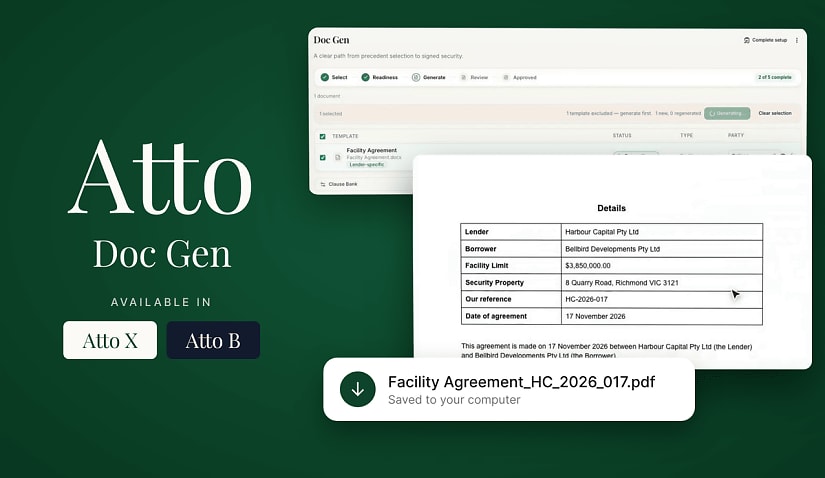

Every banking and finance lawyer knows the drill. The term sheet is agreed, the client wants documents, and someone opens last month's facility agreement and starts typing over it. Lender name. Borrower name. Facility limit. Security property. Reference number. Date. Then the same details again in the security documents, the conditions precedent checklist and the cover email.
None of that is legal work. All of it has to be right. And one stale party name or a figure carried across from the last deal is enough to send a document back.
That is the problem Doc Gen, inside Atto B, was built to solve.
From precedent to agreement, without the retyping
Doc Gen starts where your team already starts: with your own precedents. Firms load the templates they trust, including lender-specific versions, along with a clause bank for the provisions that change from deal to deal.
When a matter is ready for documents, the lawyer picks the precedent, chooses the parties for that run and generates. Doc Gen pulls the details straight from the matter record: the lender, the borrower, the facility limit, the security property, the reference and the date. They land in every place they belong, across the whole document, at once.
The lawyer then reviews. Every field Doc Gen has filled is flagged, so the reviewer can see exactly where each detail came from and check it in seconds rather than hunting through forty pages. When it's approved, the agreement downloads as a Word document for negotiation and a PDF for circulation.
A clear path from precedent to signed security
Doc Gen follows the same steps a good finance team already follows, just without the busywork in between:
- Select the precedent for the deal.
- Readiness: confirm the matter has the details the document needs.
- Generate the document from the matter.
- Review every filled field before anything goes out.
- Approve and download.
Because the details live in one place, a change to the matter flows through to the next document. Nobody has to remember which version of the borrower's name went into which draft.
The readiness step is there for the same reason: to confirm the matter holds everything the precedent needs before a single page is generated, rather than discovering a gap once the draft is already with the client.
Built by banking lawyers
Atto B was designed by banking lawyers who have spent their share of late nights checking that a facility limit reads the same in the agreement as it does in the security deed. They started with one question: which parts of a finance matter need a lawyer's judgement, and which parts are just typing?
Doc Gen is the answer to the second half of that question. It doesn't draft the commercial terms, negotiate with the other side or decide what a client should accept. That stays with the lawyer. What it removes is the hours spent rekeying the same facts into the same places.
We don't replace the lawyer. We replace the typing.
What it means for your team
For partners, it means documents out the door faster without adding headcount, and fewer errors reaching the client. For senior associates, it means reviewing a document instead of rebuilding one. For juniors, it means more time learning how a deal is structured and less time formatting the definitions clause.
And because the details come from the matter, the whole team works from the same source of truth.
See it on your own precedents
The best way to understand Doc Gen is to see it run on a facility agreement you know. Book a demo with the Atto team and we'll show you how Atto B handles your documents, from precedent to signed security.
Book a demo at atto.legal/waitlist