

Powered by
MOMENTUM
MEDIA

The idea that insurance law needs to be “geopolitics-aware” is not new, but the flow-on consequences of the closure of the Strait of Hormuz mean that such thinking “no longer sits at the margins”.
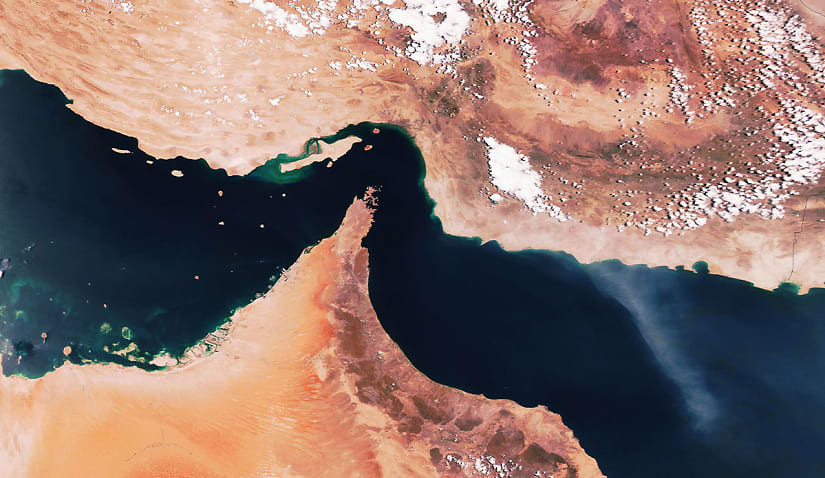

Traditionally, war has been treated as a low-frequency, catastrophic, contractual outlier (hence the inclusion of standard war exclusion clauses). In the current geopolitical and economic climate, however, such an approach will no longer be the norm. War risk, lawyers observe, is no longer exceptional; rather, it’s a core underwriting reality.
The current Middle East conflict, and especially the ongoing disruption to traffic in the Strait of Hormuz, isn’t just a geopolitical or shipping story; it’s a stress test of modern insurance law. For legal practitioners – even those without international clients – it offers myriad professional, technical, and market lessons that are likely to reshape advice, drafting, and disputes for years.
As has been reported by The Wall Street Journal, war risk premiums have surged from fractions of a per cent to 3–8 per cent of vessel value per voyage in current conditions. Meanwhile, the World Economic Forum notes that insurers are repricing, narrowing, or withdrawing cover entirely in real time.
Lander & Rogers partner Melissa Tan put it slightly differently: in conversation with Lawyers Weekly, she noted that the face of warfare has changed in frequency and form, with the current US-Iran-Israel war illustrating a multi-domain conflict in which kinetic strikes sit alongside cyber operations, electronic interference, maritime disruption, economic coercion, and information warfare.
War, she said, “is no longer a discrete and rare event; it is a persistent condition”, demanding that insurance law become continuously and structurally geopolitics aware.
Moreover, precision in policy wording is being proven to be of utmost importance, as standard clauses (e.g. war exclusions and sanctions clauses) face stress tests. Moving forward, drafting priorities for practitioners will be to specifically define triggers, anticipate geopolitical escalation, and align policy language with commercial objectives.
The lesson? Insurance lawyers must treat war risk as a dynamic, continuously priced peril, not a binary and/or excluded risk. They must increasingly understand geopolitical risk modelling, supply chain dependencies, and correlated loss scenarios.
Gilchrist Connell principal Alex Haslam said the idea that insurance law needs to be “geopolitics-aware” is not new, but it “no longer sits at the margins”.
“War risk, sanctions, and trade disruption have always been there, particularly in marine and energy. What has changed is how often those risks are being tested, and how quickly they cut across what is otherwise standard commercial cover, including property, liability, and supply chain exposures,” he said.
Cusack & Co principal Alison Cusack reflected that a common refrain is, “Well, we’re insured right?”
“Maritime lawyers have always had it somewhat easier; the peculiar nature of the maritime adventure has meant that, on balance, our clients understand that the obvious is not necessarily covered, and yet the obscure, low-probability, high-value claims likely are. The same cannot be said for other industries [that] routinely take out insurance in a tick and flick compliance ‘needs to be done” sort of way,” she said.
In early March – when the Strait of Hormuz was first closed by Iran, following attacks from the United States and Israel – Cusack appeared on The Lawyers Weekly Show to discuss the shipping law implications from what she called the “Gulf cargo crisis”.
“Australia, as an island, can be literal and figurative, insulated from the outside world (even our pests are screened),” she said, noting that the interconnected nature of the supply chain, “which is rapidly becoming apparent to the everyday person”, means insurance lawyers will be tasked with more questions, more risk assessments, and, unfortunately, more AI chats.
“In a post-COVID and Strait of Hormuz world, the invisible is now likely assumed visible, and the wilful blindness of it all may come roaring back. Risk landscapes, like supply chain routes, are now being rewritten,” Cusack said.
The good news, Tan said, is that the law is already adapting.
“We are seeing more precise and deliberate drafting around war, cyber, and sanctions to address hybrid threats; increased focus on attribution and causation; and the growing incorporation of sanctions compliance provisions with direct implications for coverage and claims payment,” she said.
“In my view, for Australian insurance lawyers, best practice in this environment requires a combination of: constant geopolitical risk awareness; building and maintaining strong cross-border counsel networks; and a disciplined focus on cyber and supply chain risk.”
“More importantly, strategic foresight must be embedded into client advice and claims strategy, rather than treated as a peripheral exercise,” Tan added.
For Australian insurers and their advisers, Haslam outlined, best practice now means treating geopolitical instability as a reality, not a possibility.
“That is shown in tighter drafting, especially around exclusions and aggregation, and closer alignment with reinsurance, as well as in a sharper focus on causation where losses are one or two steps removed from the underlying event,” he said.
“War exclusions are not becoming redundant, but they are being required to do harder work as disputes increasingly turn on how complex events are characterised. Ultimately, these questions are being resolved as much through judgment as they are through policy wording.”
The ongoing Middle East conflict and its flow-on economic and geopolitical consequences show that modern insurance law is shifting from static contract interpretation to dynamic risk governance.
For insurance lawyers, both those practising domestically and those servicing international clientele, the edge now lies in being able to anticipate how risks evolve mid-policy, having a deeper appreciation for issues of wording, causation, and allocation, and in integrating insurance with commercial and geopolitical context.

