

Powered by
MOMENTUM
MEDIA

Tax lawyers across the country have been “operating in a state of flux” since Jim Chalmers handed down last month’s federal budget.
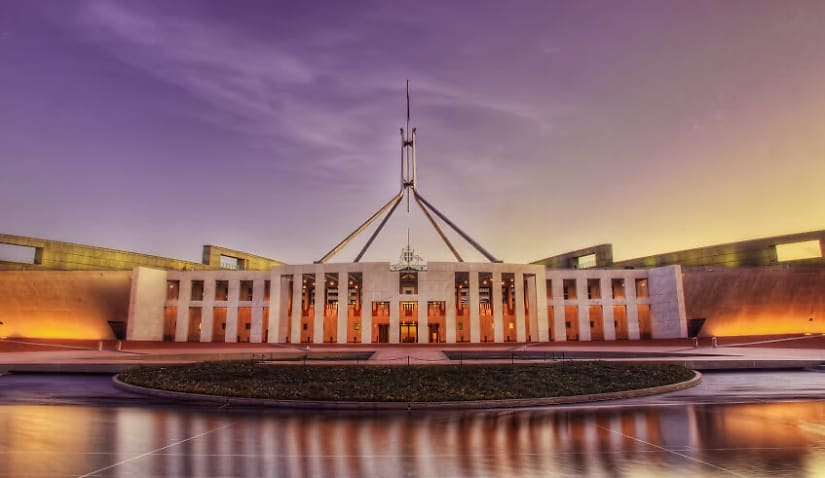

Last month, Treasurer Jim Chalmers unveiled the federal budget for 2026, which he proclaimed included “big, bold, ambitious and responsible” measures. The Albanese government, he said, had chosen the “hard road on reform, not the path of least resistance” in determining measures for this year’s budget – including making “a number of difficult decisions … to reform our tax system”.
The proposed tax reforms included: limiting negative gearing to new-build properties; replacing the 50 per cent capital gains tax discount with an inflation-adjusted approach; introducing a $250 Working Australians Tax Offset; and a $1,000 instant tax deduction.
The reforms, Bartier Perry partner Lisa To said, make this a “genuinely interesting” time to be a tax lawyer. Australia has not seen fundamental CGT reform of this scale in four decades, she noted, so the implications are “significant”.
“While I have worked through major reform cycles, from GST to superannuation changes and ongoing state tax developments, this next phase feels different. It marks a shift into more complex, personalised advisory, where the tax law is only one part of the equation,” she said.
WRP Legal director Christopher Annicchiarico agreed, calling this “certainly the most consequential period for tax lawyers since the introduction of GST”.
The far-reaching tax reforms in the budget coincide with the country’s largest intergenerational wealth transfer in history, with an estimated $3.5 trillion to $5.4 trillion to be transferred in the next decade. With much of that wealth tied up in illiquid, dutiable, post-CGT assets embedded within complex structures, he said, the proposed measures in the budget “only further heighten the importance of tailored, and well-considered tax advice in an environment marked by complexity and ambiguity”.
Reflections on the proposed reforms
What makes the recent federal budget different, To explained, is that advising on client structures is no longer just tax planning: “It now requires integrated advice across tax, asset protection and intergenerational wealth preservation and transfer.”
“Clients face real risks from creditors, relationship breakdown, and contested estates, so structures must respond to those risks. This is not just increased volume. It is highly personalised, forward-looking advice across each client’s and private group’s circumstances,” she said.
Cadena Legal managing director Harrison Dell said that the abolition of the 50 per cent CGT discount and the 30 per cent minimum tax from 1 July 2027 “forces a rebuild of how almost every client structure works”.
“We haven’t had a budget like this since the GST was introduced in 1999; we certainly didn’t need more work as tax lawyers and tax specialist advisors were already in short supply,” he said.
“Since the budget announcements demand has exploded. Accountants are under strain to provide highly complex advice, and that passes directly onto tax lawyers, too.”
Measures such as the trust changes, the reduced viability of bucket companies where effective tax rates exceed 60 per cent, and uncertainty around the three-year CGT rollover relief and state duty outcomes, “require careful, tailored analysis”, To added.
“The impact differs significantly across private equity structures, high-income individuals, private groups, agricultural families, SMEs, and vulnerable taxpayers.”
Optimal client service delivery
Dentons partner Sue Williamson said tax lawyers are already seeing clients seeking guidance on what steps they need to take, particularly whether restructuring will be required to mitigate potential adverse impacts from the removal of the CGT discount or the wide-ranging trust proposals.
“Much of the work in this area has been deferred pending the release of draft legislation. Once introduced, there is likely to be a surge of activity as taxpayers move quickly to implement appropriate structures. Compounding this will be the need to ensure that any restructuring does not trigger unintended state tax consequences, particularly in relation to property duties,” she said.
Annicchiarico said that optimal service to clients will remain grounded in clear, practical, and commercially pragmatic guidance. As tax practitioners, he said, “it is incumbent on us to interpret highly technical legal concepts and apply those to the relevant fact scenario in a manner that is easily understood by the client, and commercially viable and pragmatic”.
Dell noted that clients, as a general rule, are demanding less compliance work and much more strategic advisory. “Clients want to know whether to crystallise gains now, whether to leave Australia to go overseas, and how indexation stacks up against the new minimum tax for long-held assets,” he said.
“There is [a lot] of misinformation online, such as scare campaigns of 60 per cent or more tax rates, with the trust changes when draft law hasn’t even been released yet.”
Optimal service, therefore, “now means working very closely with the client’s accountant, and lots of face time needed to quell the general tax anxiety that has swept the nation”.
To also noted that AI is “changing how we deliver that advice”.
“The value is in how lawyers interrogate outputs and apply experience. This improves responsiveness, consistency, and the quality of advice clients receive,” she said.
As such, for tax lawyers, optimal client service “now goes beyond interpreting legislation and modelling outcomes. It requires advocacy, collaboration and forward planning”.
Moving forward
Looking ahead, Annicchiarico said that tax lawyers have been “operating in a state of flux” since Chalmers handed down the most significant budget for practitioners last month. While the proposed reforms have been outlined at a high level, he said, the operative detail, transitionary measures, and interaction with existing Commonwealth and state tax regimes remain unclear.
“Until draft legislation and explanatory material are released, little substantive work can be undertaken,” he said.
Williamson pointed out that history suggests that the legislation itself may provide limited detail, with the Australian Taxation Office expected to fill in gaps through administrative guidance. This will, she said, create uncertainty and is likely to drive an increase in private ruling requests and engagement with the Revenue authorities, and also heightens the risk of disputes, as tax legislation rarely achieves complete clarity in application.
All of this comes, she said, “at a time when the system is already managing a significant volume of existing disputes”.
“The intersection of these pressures will place considerable strain on tax practitioners. Arguably, not since the major reforms of 1985 – when CGT and FBT were introduced – has the profession faced a period of such consequence,” Williamson said.

