

Powered by
MOMENTUM
MEDIA

A law graduate has been barred from practising by the ACT Supreme Court after a pattern of reckless and troubling behaviour, including telling a royal commission officer that “the world would be a better place” if they took their own life.

Editor’s note: This story contains references to suicide and child abuse. Discretion is advised.
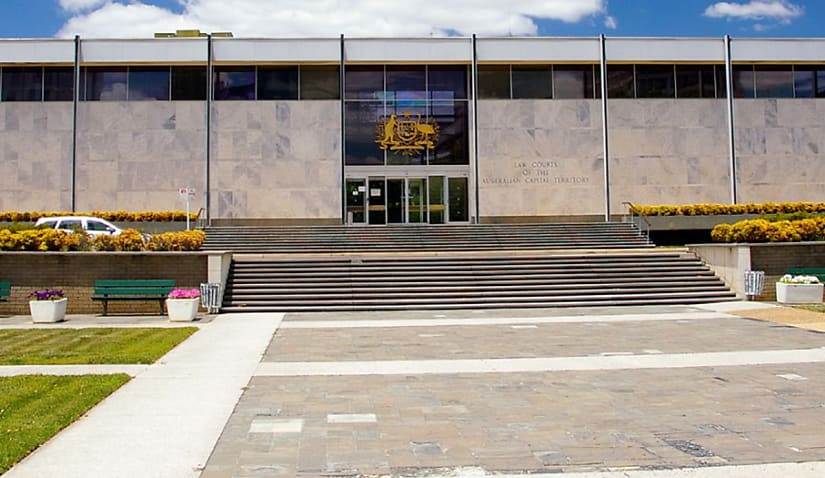
The ACT Supreme Court has refused a law graduate admission to practice, ruling that a consistent pattern of concerning and reckless behaviour revealed a lack of the integrity, judgement, and candour required of a practising lawyer.
The applicant, identified only as “G” throughout the proceedings, sought admission as a lawyer under the Legal Profession Act 2006 by applying to the Legal Practitioners Admissions Board for a practising licence.
However, despite meeting all academic qualifications and completing practical legal training, the board was not satisfied that they demonstrated the personal and professional suitability required for admission.
The Admissions Board reached its conclusion after identifying a series of serious red flags in the applicant’s record, including a Centrelink overpayment, two job terminations, late tax lodgements, and alarming emails sent to a former colleague at the disability royal commission.
The applicant disclosed a Centrelink overpayment of $2,346.79, arising from four debts between May 2019 and May 2022, attributing it to a mix of administrative issues, changes in study arrangements, and discrepancies between their reported income and Centrelink records.
The court found the applicant’s explanation for the overpayments to be unclear and ultimately unsatisfactory.
Beyond these issues, the court was deeply concerned by the applicant’s conduct following his termination as a transcriber at the Royal Commission into Violence, Abuse, Neglect and Exploitation of People with Disability.
After their employment ended – under a labour hire arrangement that permitted termination at any time – the applicant sent two emails to a commission officer.
In one email, by the application’s own recollection, they told the officer that they “seriously think if you killed yourself the world would be a better place” and “nobody would miss you”.
Moments later, they sent a further email apologising for the message, while still reaffirming that they were “seriously pissed off about what you’ve done”.
While the applicant later characterised the emails as serious “errors in judgement” that they would never repeat if admitted as a lawyer, the court noted that they failed to provide the factual context for the emails or fully explain the reasons for his termination, citing confidentiality concerns.
Compounding his failure to provide the evidence sought by the court, a central factor in its decision was the inadequacy of the applicant’s character evidence.
Against this backdrop, the applicant relied heavily on character affidavits from friends, neighbours, and family members, all of whom spoke warmly of his kindness, sense of justice, and personal integrity.
However, the court found that these affidavits did not address the specific issues of professional judgement raised by his conduct, noting that “none of those affidavits reveal an adequate basis for the deponent to speak to the applicant’s good fame and character in the context of the disclosures he had made”.
In addition, the court expressed serious concern over the applicant’s interactions with the board, noting that after it decided not to grant him the ability to practise law, he threatened to sue both the board and the government during a meeting meant to help him provide further information.
The court concluded that such threatening conduct “itself suggests unsuitability” to practise as a legal professional.
In a unanimous decision, the court upheld the Legal Practitioners Admissions Board’s refusal to issue a compliance certificate in support of the applicant’s admission, determining that they were not a “fit and proper person” to practise as a lawyer.
The court reached this conclusion after finding that the matters disclosed in the applicant’s affidavit raised more questions than they answered, leaving it unable to assess the seriousness of the concerning conduct, while the character evidence relied upon personal qualities rather than professional judgement and suitability to practise law.
For support, contact 1800 RESPECT (1800 737 732), National Sexual Abuse and Redress Support Service 1800 211 028, Lifeline 13 11 14, and Kids Helpline 1800 55 1800.

