
Powered by
MOMENTUM
MEDIA

A Victorian firm’s claim of brand confusion has failed to derail an online practice’s trademark application, with the delegate rejecting arguments of deceptive similarity and bad faith.
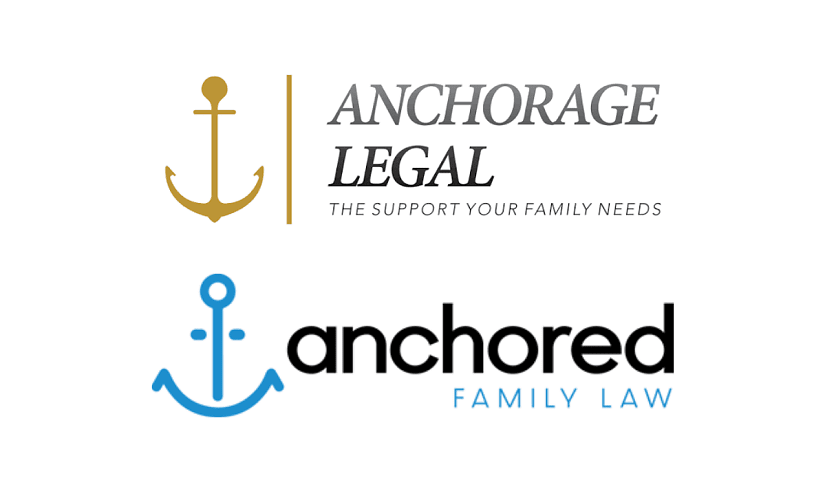

Christine Shenoda, sole director and principal of Anchorage Legal, has failed in her opposition to the trademark registration of Anchored Family Law, a practice that operates online only but with “virtual” offices in Melbourne and Ballarat.
Delegate Sean McManis was not satisfied that Shenoda had discharged her onus of establishing deception or confusion.
“After considering each mark as a whole and having regard to the nature of the services and the differences in appearance, sound, meaning and impression, I find that the opponent has not discharged its onus of establishing that there is a real, tangible danger of deception or confusion,” McManis said.
Shenoda’s argument was that both marks were deceptively similar, and not substantially identical, due to both starting with “anchor” and a visually similar pattern of “a distinctive ANCHOR-derivative word followed by a descriptive legal term”.
She also argued both marks “evoke the same underlying idea: that of an anchor, anchoring, stability and being securely fixed”.
In coming to his decision last month, McManis found the term “anchorage” is not so descriptive that the average Australian adult would encounter it daily, meaning that it is “not a word with a broadly known and well-recognised meaning”.
“On the other hand, ‘anchored’ is a word that most people will know and understand, whether that be in the context of a ship, or a metaphorical reference relating to emotional stability,” McManis said.
To support her claim, Shenoda also alleged her staff have received “misdirected telephone enquiries asking about possible meetings in Ballarat or Melbourne”. She said Anchorage Legal only has an office on the Mornington Peninsula.
In response, Anchored Family Law director Emma Maxwell said her business does not have a physical office and that, due to its advertising, new clients had never asked to meet at one.
Shenoda also claimed to have received an email from a family law barrister concerning a brief for Anchored Family Law.
Maxwell denied having a matter with this barrister.
McManis said neither example was “persuasive evidence”.
The delegate also had regard to reputation, noting that Anchorage Legal had likely developed a reputation within the Mornington Peninsula area from mid-May 2024.
“However, having regard to the general market for legal services in the fields of family law, conveyancing, wills and estates, the evidence does not establish that the Opponent’s Mark had acquired a significant or substantial reputation in that market in Australia,” McManis said.
Shenoda’s claim of bad faith similarly failed.
Citation: Opposition by Christine Shenoda to registration of trade mark application number 2451614 (class 45) [2026] ATMO 207.

