
Powered by
MOMENTUM
MEDIA

The privacy regulator has closed its inquiries into the mishandling of Australian court recordings, but questions remain about legal responsibility and the remedies available to affected litigants.
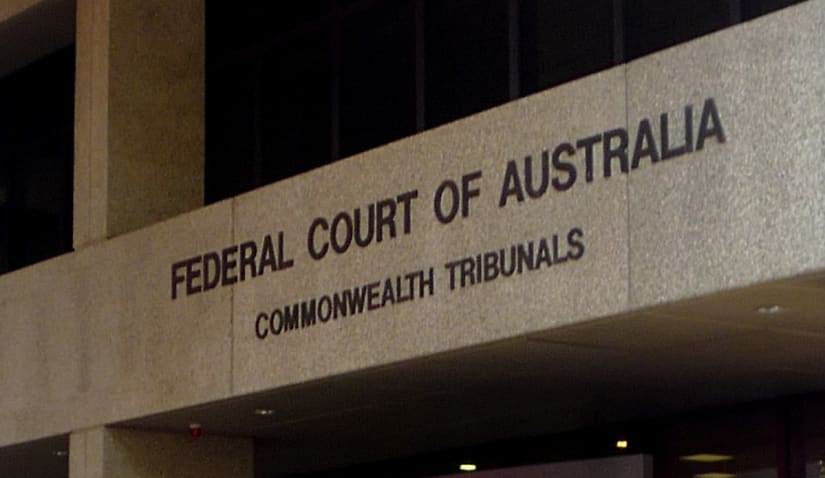

Earlier this month, the Office of the Australian Information Commissioner (OAIC) confirmed that three employees of an India-based subcontractor had accessed recordings from 93 Australian federal court matters outside the contractual safeguards designed to protect that information.
The incident involved VIQ Solutions, the former transcription provider for Australia’s federal courts, and raised concerns about how sensitive court information is handled when essential services are outsourced.
On 4 November, the OAIC announced that it would not pursue further regulatory action against VIQ, despite identifying a possible breach of the Australian Privacy Principles (APPs). The regulator took into account the circumstances of the incident, the courts’ response and the contractor’s liquidation.
However, its decision did not establish that no privacy breach occurred, nor did it resolve questions about the potential liability of VIQ or the institutions that engaged it.
For lawyers, the case raises a broader issue: when sensitive court information is mishandled by an outsourced provider, who can be held responsible – and what remedies remain when the contractor is insolvent?
When contractual safeguards fail
At the centre of the incident is information that courts routinely handle but that can be deeply personal to the people involved. The circumstances in which that information is disclosed make its protection particularly important, even when responsibility for recording and transcribing proceedings is entrusted to an external provider.
“People often come into contact with the court system during some of the most difficult moments of their lives,” Australian information commissioner Elizabeth Tydd said in the foreword to the OAIC’s report.
“They are entitled to expect that their personal, and sometimes sensitive, information disclosed in court hearings will be treated with particular care.
“Public reporting concerning the handling of court audio recordings and transcripts by VIQ Solutions Pty Ltd (VIQ), a transcription service used by many courts and government agencies in Australia, raised the possibility that this expectation had not been met. Those reports alleged that large quantities of sensitive court documents were improperly disclosed to a foreign entity.”
According to the regulator, the recordings remained stored on Australian servers. Employees of e24 Technologies, a subcontractor based in India, obtained access through VIQ’s transcription platform after permissions were granted in error.
Five employees were given access between September 2025 and February 2026, although only three accessed recordings. The OAIC identified snippets from 93 court matters, many of which likely contained personal information.
The federal courts’ contract with VIQ expressly prohibited offshore access to personal information without permission and required the company to protect court data from unauthorised access.
The OAIC found that those arrangements adequately protected the courts’ information rights, but that the incident occurred outside them.
“As shown in the present case, data breaches and unauthorised access can still occur in circumstances where contracting and procurement procedures are followed and contracts include the required information rights protections,” the regulator said.
The finding raises questions about the effectiveness of contractual safeguards when the systems used to enforce them fail.
For institutions outsourcing sensitive services, the issue extends beyond whether an agreement contains appropriate confidentiality and security provisions. It also concerns how access is controlled, how subcontractors are monitored and whether the contracting institution can identify and respond to failures.
Who carries the legal responsibility?
The VIQ incident exposes the complexity of applying privacy obligations when courts engage private contractors to handle information arising from judicial proceedings.
Under section 7(1) of the Privacy Act 1988 (Cth), acts and practices of federal courts connected with their judicial functions are generally excluded from the act’s operation, unlike matters of an administrative nature.
The OAIC considered that the recordings involved in this incident related to the conduct of court hearings and therefore appeared to fall within the judicial-functions exception.
“The acts and practices of the Federal Courts relevant to the incident related to the conduct of court hearings,” the regulator said.
However, VIQ remained subject to the APPs as a private-sector entity.
The OAIC examined whether the offshore access breached APP 8, which concerns cross-border disclosure, or APP 11, which requires reasonable steps to protect personal information against unauthorised access and other risks. It considered an APP 8 breach unlikely.
Although employees in India had accessed the recordings, the information remained within VIQ’s systems, could not be downloaded through the platform and had not been released from the company’s effective control.
The OAIC, therefore, characterised the incident as unauthorised access within VIQ’s systems, rather than a disclosure of information by VIQ to an overseas recipient.
Its assessment of APP 11 was less conclusive.
The regulator identified an access-control error as the cause of the incident and acknowledged that VIQ had security policies and procedures in place. However, it had not verified how consistently those measures were implemented.
“The fact that a breach occurred does not, on its own, mean that an organisation failed to take steps as are reasonable in the circumstances,” the report said.
Nevertheless, the ability of employees from a company with no direct contractual relationship with VIQ to access Australian court recordings raised concerns about the adequacy of its security controls.
The OAIC considered there was a reasonable basis for concern that VIQ may have breached APP 11, although it stopped short of making a concluded finding.
The outcome leaves an important question unresolved: whether the contractor’s security measures were legally sufficient, notwithstanding the unauthorised access that occurred.
What remedies remain for affected litigants?
The regulator’s decision to close its inquiries does not necessarily prevent individuals from pursuing their own complaints.
“The OAIC has not conducted a CII and this report does not make concluded findings,” the report said.
It further explained that the preliminary inquiries could inform future privacy complaints, which would be considered individually under the Privacy Act.
Depending on the circumstances, a successful complaint may lead to remedies, including compensation for financial or non-financial loss.
However, affected litigants would still need to establish that their personal information was involved in an interference with privacy and demonstrate the basis for any compensation sought.
The OAIC found that some recordings likely contained personal information, but the report did not establish that every person involved in the affected proceedings had experienced an actionable privacy interference. Similarly, it did not conclude that the accessed information had been downloaded or subsequently disseminated.
For affected litigants, establishing what happened to their own information may therefore be a significant preliminary obstacle. Even if a complaint succeeds, VIQ’s liquidation raises a separate question about whether an award of compensation could realistically be recovered.
Another possible avenue is Australia’s statutory tort for serious invasions of privacy, which commenced on 10 June 2025.
The tort allows individuals to bring proceedings for certain serious intrusions upon seclusion or misuse of information, but requires proof of intentional or reckless conduct, a reasonable expectation of privacy and a serious invasion. The public interest in protecting privacy must also outweigh competing public interests.
Those requirements could prove difficult in a case involving an inadvertent permissions error.
The OAIC’s findings do not determine whether any person acted recklessly, and the nature of the information accessed would be relevant to whether an individual could establish a serious invasion of privacy.
Although the tort is actionable without proof of damage, it does not provide an automatic remedy for every unauthorised access incident.
Can the courts be held accountable?
The Federal Court’s contract with VIQ contained several protections, including restrictions on disclosing confidential information, requirements to prevent unauthorised access and obligations concerning compliance with the Privacy Act.
The OAIC concluded that the contractual arrangements adequately secured information rights under the relevant statutory framework.
Those provisions may provide a contracting institution with remedies if a service provider fails to comply with its obligations.
Depending on the terms and circumstances, a breach may give rise to claims for damages or other relief. However, an affected litigant would not ordinarily be entitled to enforce a contract between a court and its transcription provider merely because their information was involved.
Contractual rights generally belong to the parties to the agreement, subject to any applicable exceptions. Individuals considering separate civil claims would therefore need to identify another legal basis for relief, potentially involving obligations of confidence or other established legal duties.
The nature of the court information could also affect the legal position.
While some material is disclosed in open court, other information may be subject to suppression orders, confidentiality restrictions or statutory protections.
The OAIC reported that the federal courts had reviewed the affected files and were satisfied, on the available information, that they did not involve suppressed matters or matters covered by a confidentiality scheme, while acknowledging the specific restrictions governing the identification of participants in family law proceedings.
Whether an individual could pursue a separate claim would therefore depend on the information involved, the conduct alleged and the legal obligations owed by the proposed defendant.
When the contractor is insolvent
VIQ entered voluntary administration in March 2026, ceased its Australian operations in July and was placed into liquidation in August.
Its financial position was a significant consideration in the OAIC’s decision not to proceed with further regulatory action.
In her foreword, Tydd said: “Our preliminary inquiries identified the possibility that VIQ had breached APP 11 – requiring the security of personal information.”
However, she said the regulator had concluded its inquiries without commencing a commissioner-initiated investigation, adding that further investigation was not warranted and additional resources could not be justified given VIQ’s liquidation and cessation of Australian operations.
The regulator was equally explicit in its concluding assessment:
“As the incident is materially smaller than media reporting suggested, and in light of the Federal Court’s steps to assess and respond to the incident, and the fact that VIQ is no longer operating, the OAIC is of the view that the harms resulting from the overseas access to Australian court data can be adequately addressed and further regulatory action against VIQ would not be an appropriate use of the OAIC’s resources,” it said.
For affected individuals, however, insolvency presents practical difficulties that go beyond the regulator’s decision.
Even where a claim can be established, recovery may depend on whether the company has sufficient assets to satisfy creditors.
The OAIC itself encountered difficulties obtaining information during its preliminary inquiries, describing the process as “challenging and protracted”.
VIQ’s administrators advised that they did not hold all the requested information, prompting the regulator to seek further material from its overseas parent company.
The experience raises concerns about the availability of records, system logs and other evidence when an outsourced provider ceases operating. After all, a contractor’s insolvency does not automatically transfer liability to its parent company, subcontractors or the institution that engaged it. Further, any claim against another entity would require a separate legal foundation.
Accountability after the investigation
The OAIC’s decision has ended one regulatory process, but it has not conclusively resolved whether VIQ breached its privacy obligations.
The regulator found that the courts had established appropriate contractual safeguards, identified a possible APP 11 contravention and decided against further investigation.
It also expressly left open the possibility of individual privacy complaints and future regulatory action.
For lawyers advising institutions that outsource sensitive services, the case highlights the importance of ensuring that contractual protections are supported by effective security controls, subcontractor oversight and reliable access to records when incidents occur.
For affected litigants, the position is less reassuring.
The available remedies involve different legal thresholds, and pursuing them may require evidence that is difficult to obtain from a company that has ceased operating.
Ultimately, the VIQ incident raises a question that extends well beyond court transcription services: when sensitive information is entrusted to an external provider, what happens when contractual safeguards fail and the entity responsible is no longer in a position to answer for it?
