
Powered by
MOMENTUM
MEDIA

Investment in young Australians, targeted skilled migration, and a shared national purpose must work together to address Australia’s skills shortages and strengthen social cohesion, writes Farhan Rehman.

Australia doesn’t need another argument. It needs a common goal.
If I could help build a school, it would be open to people of every faith and to those of no faith at all.
There would be halal meat pies at the canteen, kosher sausage sizzles, a separate bacon grill for those who prefer that option, and plenty of vegetarian choices, including tofu burgers. And, while we’re at it, I would bring back a healthier version of the $2 potato gravy on chips at school that I miss so much.
There would be a prayer room for those who observe prayer throughout the day, those who pray weekly or occasionally, and those who simply need a quiet place to meditate or reflect.
Maybe we could even bring back the 15-minute midday nap that I fondly remember from Mrs McLean’s class at Horsham West Primary. Hopefully a few other 80s Aussie kids can relate.
But the point of such a school wouldn’t simply be that everyone attended the same place and learnt to coexist. It would be to create an environment where our differences eventually didn’t seem all that different at all. Rather than concentrating on what separated students, everyone would be working towards the same objective: making their school exceptional. A school aspiring to lead the country in academia, wellbeing, trades, creativity, theology and innovation.
Many different people. One clear pursuit of excellence.
Perhaps building a school like that with some like-minded people in regional Australia could be my retirement plan.
At a recent board meeting, Bruce Atkinson AM raised a thought that has stayed with me: perhaps Australia needs to think about moving from multiculturalism towards interculturalism. I’m not entirely settled on that proposition yet. But it’s worth asking whether we have become so focused on recognising our differences that we sometimes forget to utilise each other’s strengths.
We know what made Australia a beautiful country, and it wasn’t simply the weather and the beaches.
Not long ago, I met Kay Hull AO, the former National Party member for the federal seat of Riverina. Kay spoke about many things, but what particularly struck me was her life before politics. She had been a female small-business owner, running a car repair and smash repair workshop with her husband.
That lived experience gave her observations about Australia’s trades’ particular weight.
One point has stayed with me: we have allowed trades to be perceived as a secondary or somehow inferior pathway at school, while continuing to promote the idea that university is the natural destination for everyone.
It took me back to my own school years. An apprenticeship was sexy. Young people wanted to get into TAFE, learn a trade and start earning, sometimes leaving school after year 10 to do it. Admittedly, coming from a family originally from the subcontinent, I don’t remember the trades being up for discussion around our dining table.
But perhaps Australia needs to make the trades attractive again.
The workforce challenge is substantial. Australia faces shortages in trades that will remain with us without a serious, long-term response combining domestic training with targeted skilled migration.
Infrastructure Australia has projected a potential shortfall of more than 300,000 construction workers by mid-2027, while trade commencements have continued to decline and tens of thousands of trade contracts have been cancelled or withdrawn.
And construction is only part of the picture. Skills shortages are being felt much more broadly.
I appreciate that, after more than 15 years as an immigration lawyer, some might assume I approach this question with a particular bias. But my preference is actually for Australia to increase its productivity through a long-term sovereign strategy. Sovereignty does not mean migration must stop, nor is migration somehow the opposite of national self-reliance.
If Australia started tomorrow with a clear strategy to expose young Australians to vocational pathways at school and then guide them towards the trades our country needs, it would still take years to reverse entrenched skills shortages. That long-term work should begin. But it does not remove the immediate need for carefully targeted migration.
Instead, migration has increasingly become a political football.
At the same time, I’ve watched the national conversation become more polarised than I can remember.
Some of that frustration is undoubtedly connected to the economic pressure Australians are experiencing. Cost of living, housing and economic insecurity create fertile ground for simple explanations to complex problems.
But polarisation itself comes at a cost. When we spend our time blaming one another rather than dealing with the underlying problems, we become less capable of solving them.
I had an interesting conversation about this with Simon Kuestenmacher, co-founder of The Demographics Group. His view was that Australia’s political and social “middle”, as we once understood it, has disappeared. I subsequently raised this with Talal Yassine AM, an Australian entrepreneur, business leader and academic, and he challenged the proposition.
Talal’s view was that the strength of Australia’s institutions, combined with our unique voting system, means Australians ultimately continue to meet somewhere around the middle through the ballot box. Perhaps both observations contain some truth?
Australia may be more economically frustrated and politically fragmented than it once was, while our democratic institutions continue to pull us towards a shared centre.
My concern is what happens in between.
Housing, migration and other major national questions are increasingly debated in an online environment governed by algorithms. Economic anxiety makes people more vulnerable to simple narratives, while social media often rewards outrage over nuance.
That is a dangerous combination when Australia’s acute problems require long-term thinking rather than political theatre.
In a recent address on migration changes, Tony Burke described Australia as not a melting pot, but more like an orchestra. I understand the sentiment, and I like the metaphor. But perhaps Australia is bigger and messier than an orchestra. Not everyone wants to play the same instrument, and not everyone enjoys traditional Haydn as much as I do.
Which brings me back to that imaginary school.
In many respects, Australia already has its foundations.
The structures exist. The institutions exist. The playground is there. So is the syllabus. And many of the teachers still remember a time when the national vision seemed clearer.
Perhaps what we need is to get off social media occasionally and start talking seriously to each other about what we want from the government of the day, and from ourselves.
Middle Australia is still here, and our institutions are the strongest in the World.
Migration is not Australia’s problem. Migration has existed throughout human history and will continue to exist.
What Australia is missing is something different: a collective direction and a national vision people can recognise themselves in.
We can reduce our trade shortages by training young Australians, changing the perception that university is the only worthwhile pathway and using targeted visa programs where genuine gaps remain. But even that requires something larger.
We need to know what we are collectively trying to build.
It is easy to polarise a country. It is much harder to unite one.
Yet polarisation ultimately produces weakness, while a common purpose can produce extraordinary strength.
In his policy speech for the 1987 federal election, Prime Minister Bob Hawke made an extraordinarily clear promise: “By 1990, no Australian child will be living in poverty.”
Whatever history’s judgement is of that promise, Australians understood the objective. It was tangible. You could repeat it. You could debate whether the government achieved it. Most importantly, people knew what the destination was supposed to be.
Perhaps that’s what Australia is waiting for again.
Not another slogan. Not another argument about who is responsible for our problems. A clearly identifiable national goal capable of bringing Australians to the same table.
Many backgrounds. Many beliefs. Many different experiences.
But one country, with a clear idea of where it wants to go.
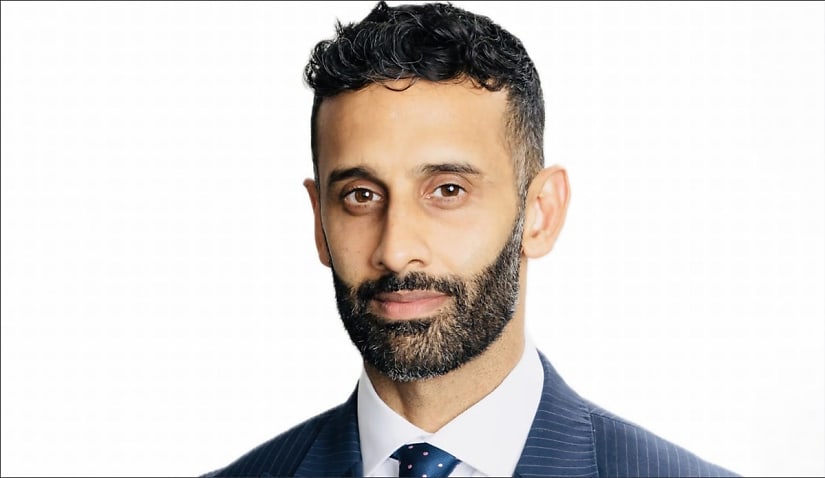
Farhan Rehman is an immigration lawyer and principal of Rehman Sheriff Group.
