

Powered by
MOMENTUM
MEDIA

Kyle Sandilands and Jacqueline Henderson’s fallout with ARN Media is as much about contracts as it is about conduct. In this interview, an employment lawyer breaks down where personality-driven broadcasting ends and where contractual obligations begin.

The long-running, controversy-soaked spectacle that was KIIS FM’s The Kyle & Jackie O Show has entered its next chapter in a fittingly dramatic fashion, only now it features contract legalese, extensive legal teams, and a judge of the Federal Court of Australia.
Kyle Sandilands and Jacqueline Henderson’s 27-year partnership imploded live on-air on 20 February when the former criticised his co-star for being “unworkable” and “off with the fairies”. Although a feature of their partnership, this tirade was Henderson’s last straw.
Having refused to work with Sandilands, Henderson’s contract was terminated shortly thereafter. When he allegedly failed to rectify his serious misconduct, Sandilands’ contract followed closely behind.
The Federal Court was told late last month that Sandilands would readily agree to the misconduct claims, with barrister Scott Robertson SC quipping that “if you buy Kyle, you get Kyle”. However, he will argue that this behaviour was built into his contract.
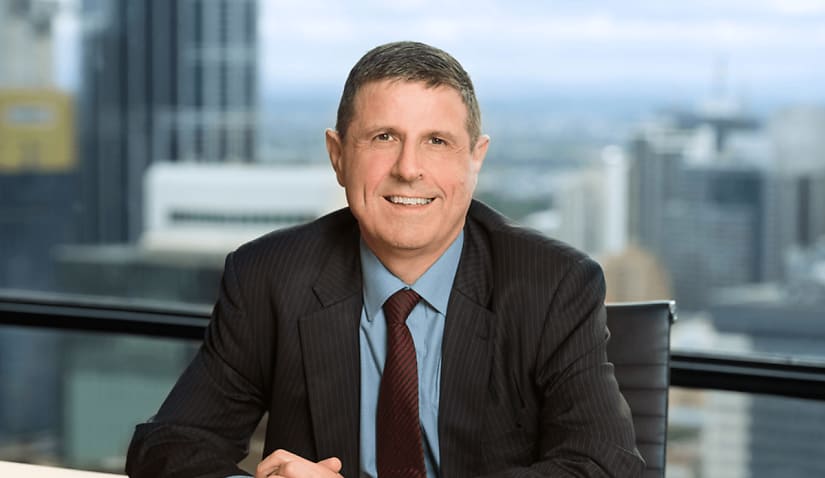
Speaking to Lawyers Weekly, Kennedys partner and employment law expert Chris Molnar said it is an employer’s right to request their employees to conduct themselves “in a particular way”. It means behavioural standards can be enforced legally either as a term of the contract or because it is a lawful and reasonable direction.
Whether a direction is reasonable depends on the circumstances, including the “terms of the contract, the nature of the role, the conditions of the employment, and industry practice”, Molnar added.
“In this case, Sandilands’ claim against his employer places significant weight on his engagement to perform as a ‘robust character’ in an intentionally provocative program,” Molnar said.
“That characterisation informs the scope of any direction that could properly be given. Where the industry and role itself are centred around controversial commentary, it will be more difficult for an employer to argue that similar conduct falls outside the scope of a lawful direction.”
At this point in the proceedings, ARN Media has argued Sandilands’ conduct constituted serious misconduct because it was a “major departure from the contractual expectations of the role”.
Molnar explained that this claim may not succeed if Sandilands’ conduct is found to fall within the scope of the contract, and a direction to alter the behaviour fundamentally is not likely to be lawful and reasonable.
Much of the damage Sandilands is alleged to have suffered hinges on his continued absence from the airways, with Robertson submitting that he is a “broadcaster and performer who wants to get back behind the microphone as soon as possible”. Ideally, this is before his regular audience have found a show they would rather listen to.
Under work health and safety legislation, Molnar explained employers are generally supported in taking precautionary steps – such as suspension – where there are serious allegations, “provided those steps are proportionate and undertaken in good faith”.
“The key issue will be whether the employer’s response was reasonable in light of the available information. This may include whether the conduct met the definition of serious misconduct and whether the process followed, including the 14-day period given to Sandilands to respond, was fair,” Molnar said.
“If the employer’s actions are found to be disproportionate, in particular not supported contractually, the resulting reputational harm is likely to become relevant in the assessment of damages. The priority for an employer is to have a safe workplace.”
As for Henderson, her proceedings revolve around the allegations that she was systemically attacked and humiliated on-air in such a way that it left her psychologically unwell. Henderson has claimed that no one in the group attempted to step in and protect her from this behaviour.
Henderson’s adverse action claim under the Fair Work Act focuses on whether the termination of her agreement occurred because she exercised a workplace right to make a bullying complaint, Molnar said. These claims are concerned with an employer’s reason for the conduct, “rather than the broader workplace culture”.
Molnar added that employers have a positive duty to identify and manage psychosocial hazards under the regulations, which includes “work design, management, or workplace interactions that may cause a negative psychological response that creates a health or safety risk”.
Employers are required to eliminate risks where possible and reduce them through appropriate control measures. Molnar said they should also be reviewing the measures in “certain circumstances, including where a complaint is made, or new information becomes available”.
“In a high-profile media environment, the risk of psychosocial hazards may be heightened due to the nature of the work.
“Live broadcasting, public scrutiny, and an intentionally provocative format can all contribute to psychosocial risk. Importantly, these factors do not reduce an employer’s obligation, but rather require a more proactive approach to risk management,” Molnar said.
Henderson will rely on broadcast recordings, internal communications, text messages, and a complaint letter sent by her solicitors to make out her case. The timeline is likely to be relevant in establishing whether the risk was known and ongoing, Molnar said.
“In this case, the adequacy of the employer’s response to Henderson’s complaints will be closely examined,” Molnar said.
“The allegations include that no intervention occurred during the broadcast and that no effective measures were implemented afterwards. If those allegations are established, they may support both the work health and safety aspects of the claim, as well as the broader contractual and statutory claims.”
For both Sandilands and Henderson, as high-profile individuals, reputation will play a central role in the damages debate. For Henderson, this also includes a claim of misleading or deceptive conduct by ARN Media when it announced to the Australian Securities Exchange that she had commenced legal proceedings.
“She claims that the announcement conveyed that she had engaged in conduct that was untrue, which, if established, may support a claim for compensation,” Molnar said.
“For Sandilands, the allegation that his conduct justified termination may also have reputational consequences that affect his future earning capacity. Courts will consider whether the employer’s conduct, if unlawful, contributed to that harm and whether it was a foreseeable consequence of the termination of employment.”

